

Baby proofing checklist by age and by room
The room by room, age by age list we send when someone asks where to start, with the fix for each hazard


Somewhere around four months they roll, and the changing table stops being somewhere you can put them down for a second. A couple of months later they're sitting up and reaching. Then one afternoon they're across the room before you've finished your tea, and the cupboard under the sink, the one with the bin bags and the dishwasher tablets in it, is the most interesting place they've ever seen.
You don't have to do the whole house in a weekend. Do the bit they can reach now, then the next bit when they get to it. That's what the two tables below are for.
This is the list we send when someone emails asking where to start.
Quick answer: Start when they roll, around 4 to 6 months, with the room they spend the day in. Cupboard locks, corner protectors and door stoppers go in before they crawl (about 7 to 10 months). Stair gates at both ends of the stairs and window restrictors upstairs go in before they pull up (9 to 12 months). Then get down on your knees and look at what's left.
Key facts
- The NHS says to fit safety gates that comply with BS EN 1930:2011 once your baby is crawling, and to keep them at the top and bottom of the stairs until they're at least 2.
- Falls are 44 per cent of children's accidents at home, according to RoSPA.
- A typical kitchen needs six to ten cupboard locks. The kit has eight, the locks pack has ten.
- Adhesive fixings need a clean, dry surface and a full 24 hours to cure before a toddler tests them.
- Window restrictors are the piece most people leave until last. Any upstairs window they can reach wants one before they pull up.
When to start baby proofing
The honest answer is before you need it, which means the stage before the one they're at. Rolling means don't leave them on the bed. Sitting means the coffee table matters.
Crawling means the cupboards, the stair gates and anchoring anything that can tip. By the time they're pulling up you want the windows done, because the first thing they pull up on is whatever's nearest, and upstairs that's often the window sill.
The ages below are rough. Some babies crawl at six months, some skip crawling and shuffle about on their bottom at ten. Go by what yours is doing, not the calendar.
| Stage | Roughly when | What changes | Sort now |
|---|---|---|---|
| Rolling | 4 to 6 months | They roll off whatever they're lying on. Not moving across the floor yet. | Nothing to fit. Never leave them on a bed, sofa or changing table, even for a second. Order the kit now so it's in the house before the next stage. |
| Sitting | 6 to 8 months | Reaching from the floor: cables, the bottom shelf, anything on a low table. | Corner protectors on the coffee table and hearth. Socket covers on extension leads at floor level. Cables tucked away. |
| Crawling | 7 to 10 months | Across the room in seconds. Cupboards, drawers, the bin, door edges. | Magnetic cupboard locks on the low cupboards and drawers. Safety straps on the bin, the fridge and the toilet seat. Door stoppers on the doors they crawl between. An oven lock. Stair gates at both ends of the stairs, because the NHS says fit them once your baby is crawling, and anchor anything that can tip. |
| Pulling up | 9 to 12 months | Standing at the stairs, the window sill, the bathroom door. Climbing onto anything that holds still. | Check the gates are still tight. Window restrictors on every upstairs window they can reach. A door handle lock on the bathroom. Low furniture away from windows. |
| Walking | 12 months and on | Faster, taller, and opening things you thought were out of reach. | Re-check the anchors on bookcases, chests of drawers and the TV, because now they climb. Keep the gates until at least 2 and the corner protectors until 3 or 4. |
10% off your first order at BABYGO®. Pop your email in and the code is on its way.

Baby proofing room by room
Kitchen first, then the stairs, then the bathroom. The living room is where they spend the day so it feels like the priority, but it's mostly corners and cables. The kitchen and the stairs are the two highest risk areas of a house, and they're where the serious accidents happen.
The NHS baby and toddler safety page is where the cooker, medicine and window advice below comes from. It's short and worth ten minutes.
| Room | The danger | The fix |
|---|---|---|
| Kitchen | The cupboard under the sink, the bin, the knife drawer, the oven door, a pan handle over the edge of the hob, the kettle flex. | Cupboard locks on every low cupboard with anything sharp, heavy or chemical in it. Straps on the bin and the fridge. Oven lock on the door. Cook on the back rings with the handles turned in. A cordless kettle or a short flex. Leave one low cupboard open with the plastic bowls and wooden spoons in it, so they have somewhere to go. |
| Living room | Coffee table and hearth corners, a TV or bookcase that can tip, hot drinks on low tables, trailing cables, the fire. | Corner protectors on everything at their head height. TV and bookcase anchored to the wall. Hot drinks up high. Cables clipped down and socket covers on the extension lead. A fireguard if you have a fire. |
| Stairs | Falling down them, climbing up them, gaps in the banisters. | A gate at the top and the bottom, kept until they're at least 2. Banister gaps wider than 6.5cm boarded or netted, which is the NHS figure. Which type of gate goes where is in the stair gates guide. |
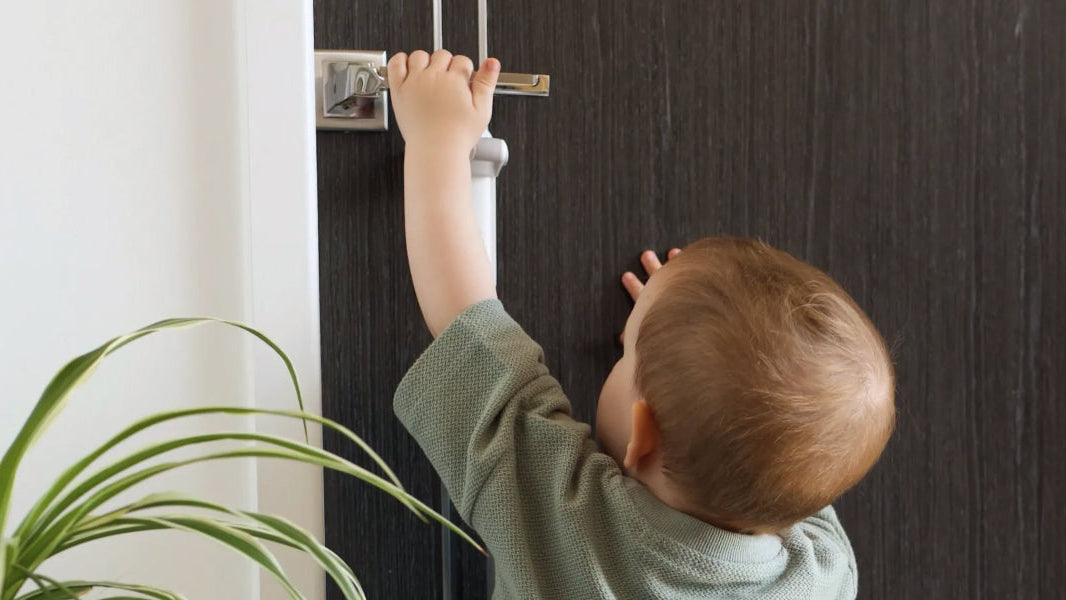
| Bathroom | Medicines, the toilet, the bath, cleaning products, and the door itself. | Medicines locked away or high up, out of sight. A strap on the toilet seat. Cleaning products high up, including the toilet ones, or a lock on the low cupboard. A door handle lock on the outside so they can't get in there without you. |
| Bedroom | A chest of drawers to climb, cot bumpers and toys to climb on, the window. | The chest anchored to the wall, and the drawers strapped so they can't be pulled out as steps. Cot bumpers and toys out of the cot. The bed and any furniture away from the window. |
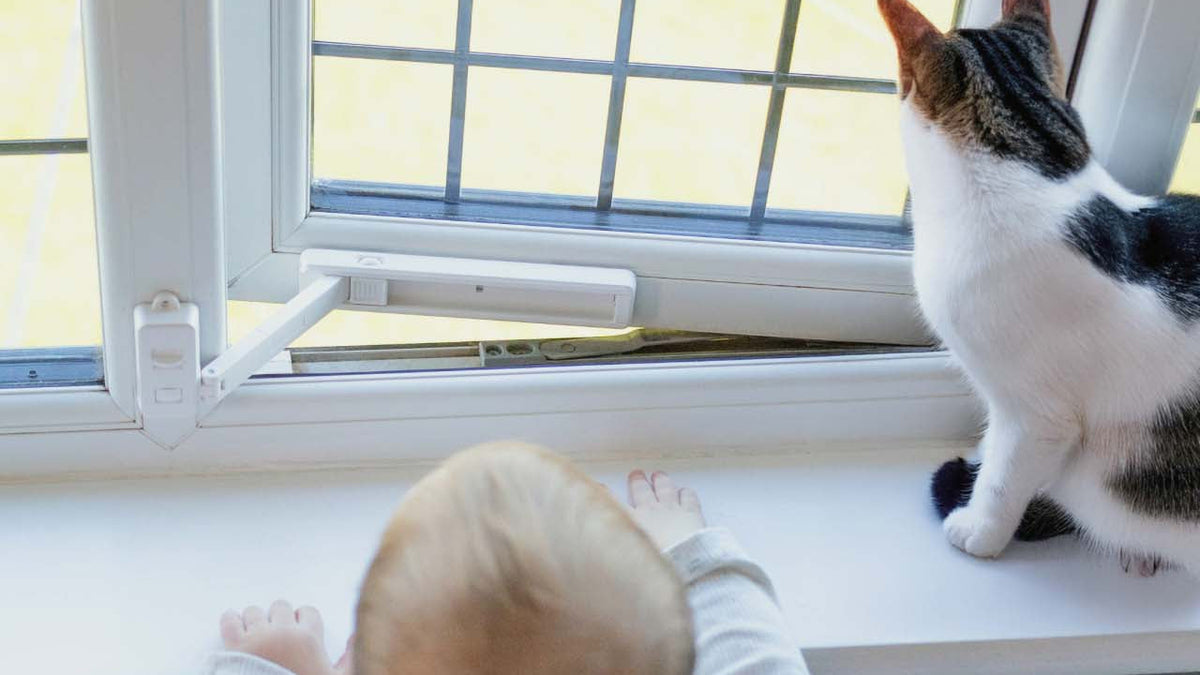
| Windows | Falls, upstairs especially. | A restrictor on every upstairs window they can reach, set so an adult can release it in an emergency. The NHS says an opening under 6.5cm. Nothing under the window that can be climbed. The stick-on type fits uPVC and wooden frames without drilling: see the window restrictor. |
Most of what's in those two tables comes in one box (the gate and the restrictors are separate), if you'd rather not order six things separately and find the gaps afterwards.

BABYGO® Baby Proofing Kit
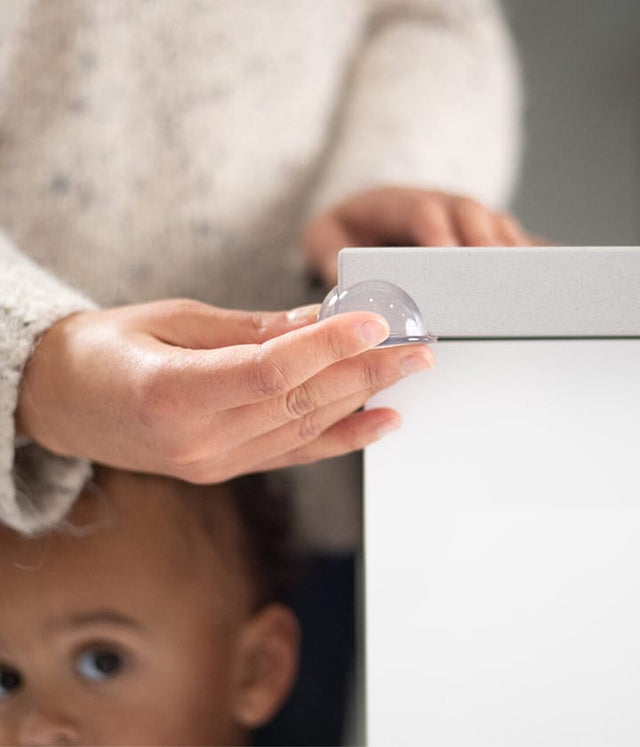
Eight cupboard locks and catches, a magnetic key, eight corner protectors, four straps, two door stops, eight socket covers and an oven lock, all adhesive, no drilling. It doesn't include a stair gate or window restrictors.
£40
How to baby proof cupboards and drawers
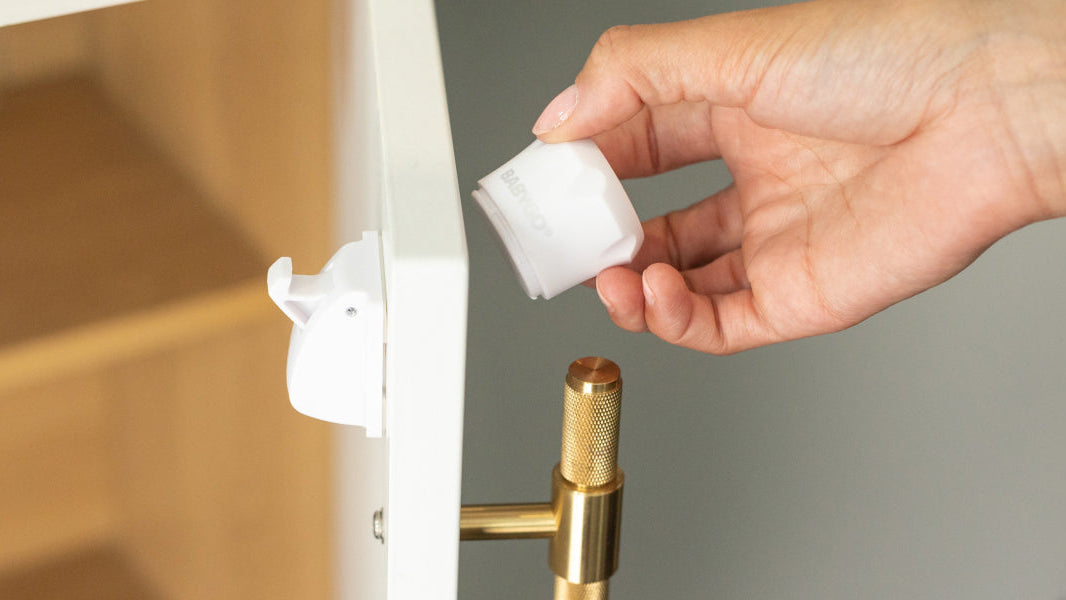
Magnetic locks are the ones people email about most. The lock sits inside the cupboard door and the catch on the frame, so nothing shows from the outside, you open it with the magnetic key held against the front, and it switches off when there's no toddler in the house.
The ones to lock: the under-sink cupboard, wherever the cleaning stuff lives, the bin drawer, and any low cupboard with glass or heavy pans in it. Don't lock everything. For the fridge, the freezer, the bin and any cupboard where the door and frame don't line up, use a strap instead.
Fitting them so the pads actually hold, the drawers they won't fit, what to check when the key won't open one and how many a kitchen needs is a piece of its own: magnetic cupboard locks, how they work and how to fit them. The locks page answers the quick fitting questions.

BABYGO® Magnetic Child Safety Locks
Ten locks, ten catches, two magnetic keys and eight corner protectors in the box. Hidden inside the door, switch off when the grandchildren go home. One reviewer wrote: "Even for someone not great at DIY these are super simple to install and operate."
£22
Fitting tips that save you doing it twice
Clean, dry, no residue, then 24 hours. That's the whole rule for anything that sticks on, and nearly every "it fell off" email we get comes back to one of those four things.
Test the next day with your own push, not with the toddler. Every few weeks, run a thumb over the corner protectors and press down any edge that's lifting, because picking at an edge is how they come off.
The things no box covers
Five things the NHS puts on its list that no kit can do for you, and they matter as much as any lock.
- Blind and curtain cords tied up out of reach and fixed to a surface.
- Button batteries kept well away from babies and small children. They cause severe internal burns.
- Stay with them the whole time they're in the bath, never for a moment.
- Smoke alarms on every level, tested at least every month.
- Plastic bags, nappy bags included, out of reach and out of sight.
The full list is on the NHS baby and toddler safety page.
Questions we get asked
When should I start baby proofing?
When they roll, at around 4 to 6 months. Have the kitchen and the living room done before they crawl.
Do I need plug socket covers in the UK?
Usually not for the wall sockets. UK sockets made to BS 1363 have shutters built in that block the live holes unless an earth pin goes in first, so a modern socket in good condition is already protected.
Where covers do earn their place is extension leads and trailing sockets, which sit at floor level exactly where a crawler explores, and older sockets in older houses. More useful than covers: cables tucked away and RCD protection on your consumer unit.
Is the baby proofing kit enough for a whole house?
For most homes, with two gaps. A big kitchen can use most of the eight locks on its own, and the kit doesn't include a stair gate or window restrictors, which are the two things nearly every house needs. The Home Safety Kit adds the gate; the restrictors are a separate order.
Can I baby proof a rented flat without drilling?
Yes. Everything in the kit, the locks, the straps and the window restrictor fit with 3M adhesive and come off without lasting damage, and the gate is pressure-fit. On old waxed or painted wood, test one corner protector in a spot nobody sees and leave it a few days first.
How long does baby proofing take?
An afternoon for a typical house if you do it in one go, less if you do a room at a time. Then a day's wait for the adhesive to cure before you let them at it.
Next step: do the kitchen this weekend. Everything in the tables is in the baby proofing collection, and the fitting guide shows each piece going on.
Filed under Baby proofing