
Baby milestones timeline: when babies sit, crawl and walk
Most babies roll at around 4 to 6 months, sit alone between about 5 and 8 months, crawl or shuffle at around 7 to 10 months


Somewhere between the 6 to 8 week check and the first birthday, your baby will roll, sit, grab, crawl (or not), pull up and maybe take a step. You'll spend a good part of that year on the floor next to them, and a good part of it wondering whether they're on track.
Here's the timeline the NHS works to, with the ranges left as wide as the NHS gives them, plus the reviews where a health visitor actually looks. If something's worrying you between reviews, you don't have to wait for the next one.
Quick answer: Most babies roll at around 4 to 6 months, sit alone between about 5 and 8 months, crawl or shuffle at around 7 to 10 months, pull up to stand at 9 to 12 months and take first steps anywhere from 9 to 18 months. Those are NHS ranges, and they're wide. Your health visitor reviews all of it at 9 to 12 months; ring them sooner if you're worried.
Key facts
- Health visitor reviews happen within 10 to 14 days of the birth, at 6 to 8 weeks (usually the GP), at 9 to 12 months and at 2 to 2 and a half years, the NHS says.
- Crawling starts at around 7 to 10 months, and not all babies crawl; some shuffle around on their bottoms (NHS).
- First steps come anywhere between 9 and 18 months (Whittington Health NHS Trust). If there are no signs of moving at all by 12 months, the NHS says ask your health visitor.
- Sitting up and holding their head steady is one of the NHS's three signs that a baby is ready for solid food, at around 6 months.
- Most babies start teething at around 6 months; some before 4 months, some after 12, and some are born with a tooth (NHS).
Baby milestones timeline
Every range here comes from an NHS page, linked further down, and the point of the ranges is that they're ranges. A baby who sits at 8 months and one who sits at 5 are both doing fine.
| Roughly when | What many babies are doing | What changes at home |
|---|---|---|
| Birth to 3 months | Tummy time from birth, starting on your chest. Lifting their head when on their tummy by around 4 months. The new baby review at 10 to 14 days and the 6 to 8 week check. | Back to sleep, feet to foot, room at 16 to 20C. |
| Around 4 to 6 months | Rolling, tummy to back first, then both ways. Grabbing a toy with both hands. Squealing, laughing, "ba", "da", "ga". | Stop swaddling at the first sign of rolling. Never leave them on a bed or changing table, even for a second. |
| Around 6 months | Sitting with support, then alone (anywhere from 5 to 8 months). Passing a toy from one hand to the other. Getting into a crawling position. Often the first tooth. | First foods, once they can sit and hold their head steady. Corner protectors on the coffee table. |
| 7 to 10 months | Crawling, commando crawling or bottom shuffling. Sitting without support. Pulling to stand. Babbling, "dada", "mama". Clapping, peekaboo. | Cupboard locks, stair gates at both ends of the stairs, and anchor anything that can tip. |
| 9 to 12 months | Cruising round the furniture, maybe standing alone. Pointing, responding to their name. The health visitor review, with a questionnaire sent to you first. | Window restrictors upstairs, before they pull up on a sill. |
| 12 to 18 months | First steps, anywhere from 9 to 18 months, unsteady and fast. More meaningful words. If there are no signs of moving by 12 months, ask your health visitor. | Once they're walking, the NHS says 180 minutes of activity a day, spread out. Walkers and bouncers 20 minutes at a time at most. |
| 2 to 2 and a half years | The next review: movement, speech, social skills, behaviour, hearing and vision. | Stair gates stay until at least 2. |
The old version of this post had a month by month list and a chart with no ranges on it. Both are gone. A line that says "by 2 months" with no range does more harm than good at 3am.
10% off your first order at BABYGO®. Pop your email in and the code is on its way.
Gross and fine motor skills, in plain words
Gross motor skills are the big movements: rolling, sitting, crawling, standing, walking. Fine motor skills are the small ones: picking up a raisin between finger and thumb, passing a toy from one hand to the other, turning a page. Your health visitor asks about both, and the small ones matter as much as the steps.
When babies sit up
Sitting with support at around 6 months, sitting without support by around 9 months, and somewhere between 5 and 8 months the first time they sit alone and stay there. Those are the ranges the Whittington Health and Cambridgeshire and Peterborough NHS pages give.
It's the milestone people forget to film, and it's a big one. Sitting is the base for reaching, for feeding themselves and eventually for crawling.
The NHS makes it one of its three signs that a baby's ready for solid food: they can stay in a sitting position and hold their head steady, they can coordinate their eyes, hands and mouth to look at food and get it in, and they can swallow it rather than spit it back out.
Chewing fists, waking more at night and wanting extra milk aren't signs, the NHS says; that's just what babies do.
If they're not sitting independently by around 9 months, or not rolling, the Cambridgeshire and Peterborough health visiting team's list says contact them. That's a phone call, not a panic.

When babies crawl
The NHS puts crawling at around 7 to 10 months, and says straight out that not all babies crawl: some shuffle around on their bottoms instead. The health visiting team counts three ways of getting about, crawling, commando crawling on the tummy and bottom shuffling, and any of them is fine. If there's no sign of moving at all by 12 months, the NHS says ask your health visitor.
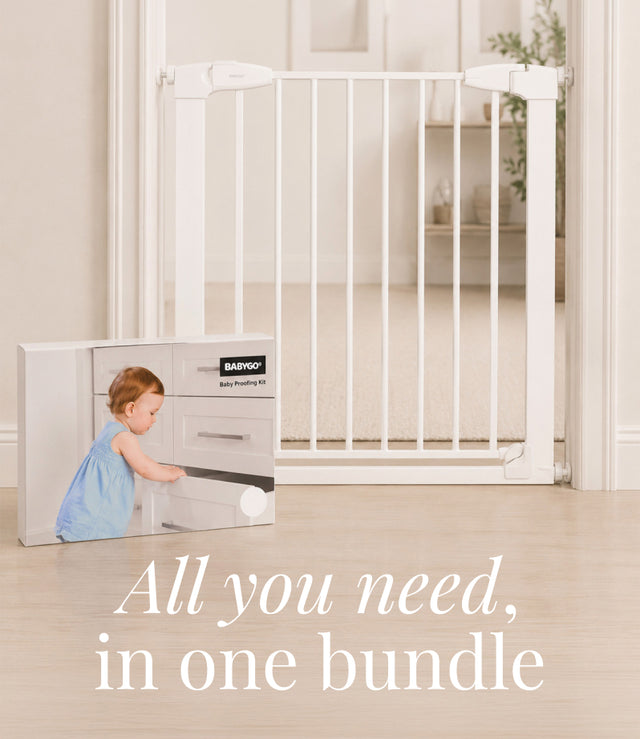
This is the one that changes the house. Once they can crawl they can climb, and the NHS safety page says the sofa is where the falls start. It also says to fit safety gates that meet BS EN 1930:2011 to stop them getting onto the stairs, and to keep gates at the top and bottom until they're at least 2.
The cupboard under the sink, the bin and anything that can tip come next. The baby proofing checklist takes it room by room.

When babies walk
Pulling up to stand from 9 to 12 months, then cruising round the furniture, then, anywhere between 9 and 18 months, the first steps. That's the Whittington Health NHS Trust range, and it's the one to hold onto when someone at a baby group mentions their 10 month old is walking.
Oxford Health puts it as usually within the first 12 to 18 months, says to ask your health visitor if there are no signs of walking by 15 months, and adds that babies who walk late, between 18 months and 2 years, usually catch up on everything after.
Two practical things from the NHS. Shoes wait: the learning to walk page says avoid putting shoes on their feet while they're learning, and go for soft soles once they're out and about. And baby walkers and bouncers are 20 minutes at a time at most, because the NHS says they can delay walking if a baby uses them a lot.
When they do start, the NHS description is exact: unsteady on their feet, but able to move very quickly, and they tend to trip and fall. Once they're walking, the NHS wants them physically active for at least 180 minutes a day, spread through the day, which they will manage without any help from you.

Rolling over, and what changes for sleep
Rolling turns up at around 4 to 6 months, tummy to back first. It's the first milestone with a safety rule attached, and the rule is about sleep.
The NHS safer sleep advice is to always place your baby on their back to sleep, in the feet to foot position, and to move them onto their back if they roll, until they can roll onto their front and back again by themselves. Keep the room between about 16 and 20C.
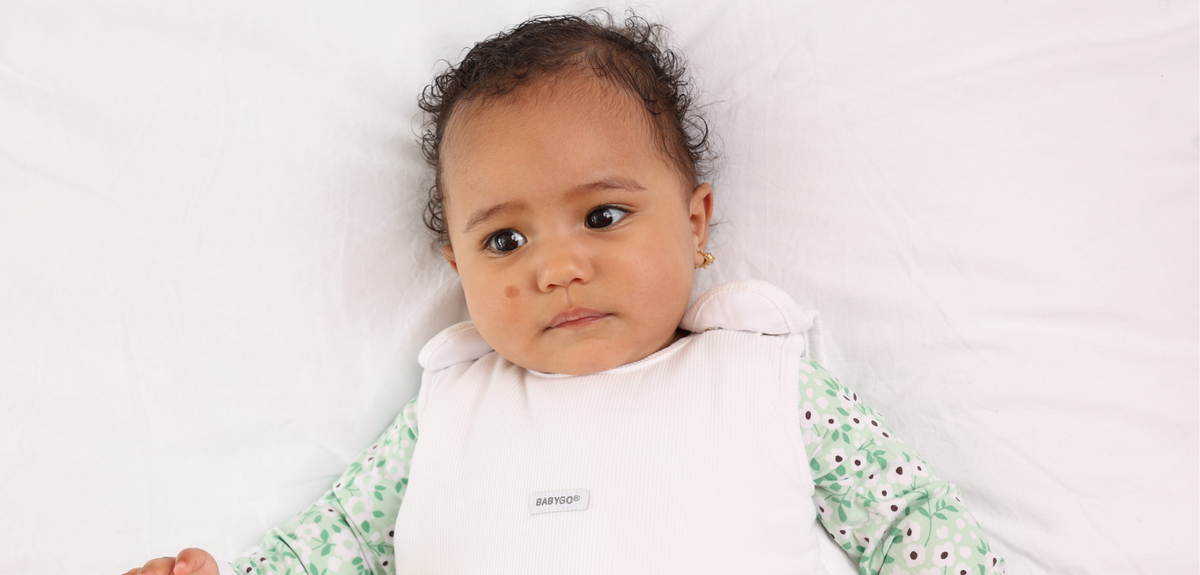
The NHS says to use lightweight blankets, sheets or a baby sleeping bag, and not to swaddle, because sleeping bags are safer. The Lullaby Trust is specific about the moment: once a baby shows signs of rolling, stop swaddling them with their arms wrapped inside.
So the rolling stage is when most people move to a sleeping bag if they haven't already. The fit test matters more than the print: with the zip closed, you shouldn't be able to pull the bag over their head.

BABYGO® Baby Sleeping Bag
Five togs from 0.5 to 3.5, so there's one for the room temperature rather than the season. Sizes 0 to 9, 9 to 18 and 18 to 36 months, bamboo outer, and a two-way zip so nappy changes happen from the feet end while they stay half asleep.
£27
What the health visitor checks and when
Four reviews, set out on the NHS baby reviews page.
- 10 to 14 days: the new baby review, at home, with a health visitor. Safe sleeping, feeding, vaccinations.
- 6 to 8 weeks: a physical examination, usually by a GP: eyes, heart, hips and, for boys, testicles, plus weight, length and head circumference.
- 9 to 12 months: a review of language and learning, safety, diet and behaviour, among other things. Your health visiting team sends you an ASQ-3 questionnaire to fill in first.
- 2 to 2 and a half years: general development, including movement, speech, social skills and behaviour, hearing and vision.
Between reviews, the NHS line is simple: if you have any concerns at other times, contact a health visitor or GP, or go to your local baby clinic. And the Cambridgeshire and Peterborough milestones pages carry the sentence to put on the fridge: milestones should be treated as a rough guide, as each child is unique and will develop at their own pace.
Questions we get asked
What are the main baby milestones in the first year?
Rolling at around 4 to 6 months, sitting alone at 5 to 8 months, crawling or shuffling at around 7 to 10 months, pulling up to stand at 9 to 12 months, and first steps anywhere from 9 to 18 months, with the first tooth and first foods around 6 months. All NHS ranges, all wide on purpose.
Is there a baby development chart for the UK?
The NHS doesn't publish one. The table above is ours, built only from NHS pages, and the official checkpoints are the health visitor reviews at 10 to 14 days, 6 to 8 weeks, 9 to 12 months and 2 to 2 and a half years.
When should I worry about baby milestones?
The NHS gives one clear line: if your baby isn't showing any signs of moving by 12 months, ask your health visitor. The Cambridgeshire and Peterborough health visiting team adds not rolling, not sitting independently and not taking weight on their legs when held standing, by around 9 months. Any other time you're worried, ring the health visitor or go to the baby clinic. Nobody minds.
Do all babies crawl before they walk?
No. The NHS says not all babies crawl; some shuffle around on their bottoms, and some commando crawl on their tummies. All three count as moving.
At what age do babies start walking?
Between 9 and 18 months, according to Whittington Health NHS Trust. Oxford Health says ask your health visitor if there are no signs of walking by 15 months, and that late walkers usually catch up.
Next step: the crawling stage is when most people order from the baby proofing collection, and the rolling stage is when the sleeping bag guide earns its keep, togs and sizes included.
Filed under Baby