

BABYGO® baby carrier guide: fit, positions and safety
Tighten the waist belt first so the weight sits on your hips, then the shoulder straps. Your baby sits facing you, high enough to kiss


The carrier's out of the box, the straps are everywhere, and your baby has gone stiff as a board the second you tried to post them into it. Everyone's first go looks like that.
This is the page for that moment. It covers how our AirMesh™ carrier fits, which of the three positions to use when, and the safety rules the NHS and the Lullaby Trust both work to, which are the same five letters.
Quick answer: Tighten the waist belt first so the weight sits on your hips, then the shoulder straps. Your baby sits facing you, high enough to kiss, knees higher than their bottom in an M shape, face uncovered and in view. Facing out waits until they hold their head steady; carrying on your back from around 6 months. The NHS's T.I.C.K.S. rules cover the rest.
Key facts
- The BABYGO® AirMesh™ carrier is for babies from 3.2kg to 14kg (7 to 30.8lb), so newborn to toddler in one carrier.
- Three carry positions, facing in, facing out and on your back, with adjustable leg openings and a head rest that doubles as an organic cotton dribble bib.
- The panel is AirMesh™, 100% polyester, there to stop heat building up between you on a long walk.
- The NHS says not to let sling or carrier material cover your baby's head, and that it's not safe to feed your baby while they're in a sling.
- It swaps between wearers in moments, so one carrier does both of you.

How the BABYGO® carrier fits
Waist belt first, and snug. It should sit on your hips and take the weight before your shoulders get involved. Then the shoulder straps, firm rather than strangling. If your back aches after a walk, it's usually because the belt was loose and the straps were doing the belt's job.
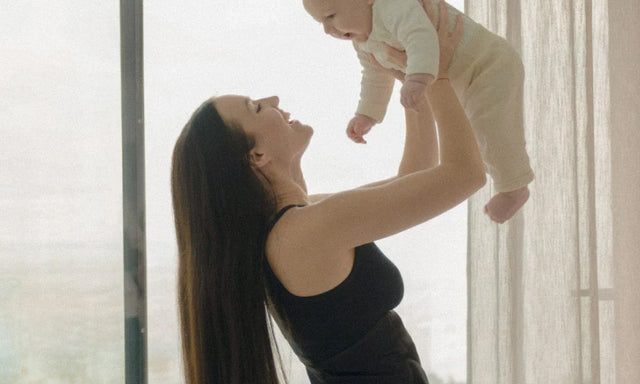
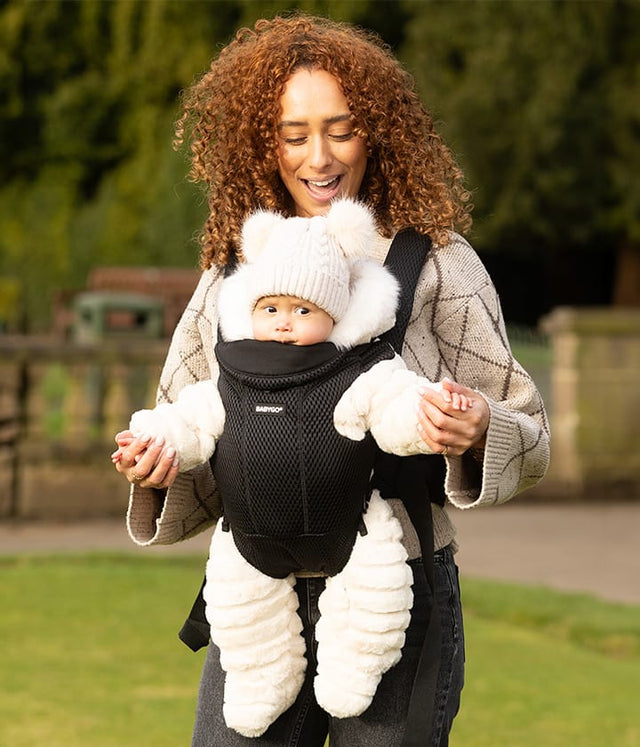
Now the baby. They sit upright and close against your chest, high enough that you can kiss the top of their head without craning.
Their legs go in a supported squat: knees higher than their bottom, thighs supported all the way to the knee, so the shape from the side is an M. That's what supports the hips while the joints are still forming, and it's what the adjustable leg openings are for.
For a newborn, narrow the seat so it reaches from knee to knee, and put the head rest up. Then check the face: nothing over it, chin off their chest, and you can see it by glancing down. If you have to move fabric to see their face, refit.
10% off your first order at BABYGO®. Pop your email in and the code is on its way.
The three carry positions and when to use them
| Position | From when | What to check |
|---|---|---|
| Facing in | From newborn, once they're 3.2kg. The one you'll use most, and the one for sleeping, because you can see their face. | High enough to kiss, M shape legs, head rest up, face in view. |
| Facing out | Once they hold their head up steadily on their own. Short spells, and back to facing in when they're tired. | Seat narrowed so the legs still sit in a supported squat, head rest folded down as the dribble bib. |
| On your back | From around 6 months, once they're too heavy to want on the front all day. | A second person to help the first few times. Weight on your hips, and up to 14kg. |
The old version of this page said facing in was for 3 to 18 months. It isn't. The carrier is made to take a newborn, and position is what matters, not age.

Safe babywearing and the T.I.C.K.S. rules
The NHS safer sleep page and the Lullaby Trust use the same checklist for slings and carriers, and it's the one to learn by heart.
- Tight: tight enough to hug your baby close to you.
- In view at all times: you should be able to see your baby's face by glancing down.
- Close enough to kiss: their head as close to your chin as is comfortable.
- Keep chin off the chest: a baby should never be curled so their chin is forced onto their chest.
- Supported back: upright, back supported, tummy and chest against you.
Two more from the NHS: do not let the material cover your baby's head, and it's not safe to feed your baby while they're in a sling. The Lullaby Trust adds that hands free feeding, where you walk about and do other jobs while the baby feeds in the sling, is unsafe, and especially so under four months.
Can a baby sleep in a carrier
They will, whether you plan it or not, and the rules don't change when their eyes close.
Face in view, chin off the chest, upright against you, nothing over their head. Facing in is the position for sleep, because you can see their face without moving anything.
When you get home, the NHS advice is the same as for any sleep: on their back, in a separate cot or Moses basket, in the same room as you, for at least the first 6 months. The NHS also says do not sleep on a sofa or in an armchair with your baby, so the carrier is for the walk, not for the afternoon nap with you dozing too.
Overheating in a carrier
You're warm, the carrier's a layer, and a baby against your chest is getting your heat as well as their own. The NHS says to take hats and extra clothing off as soon as you come indoors or get into a car, bus or train, even if it means waking them.
The Lullaby Trust's check is to feel their chest or the back of their neck; hands and feet are usually cooler, and that's normal.
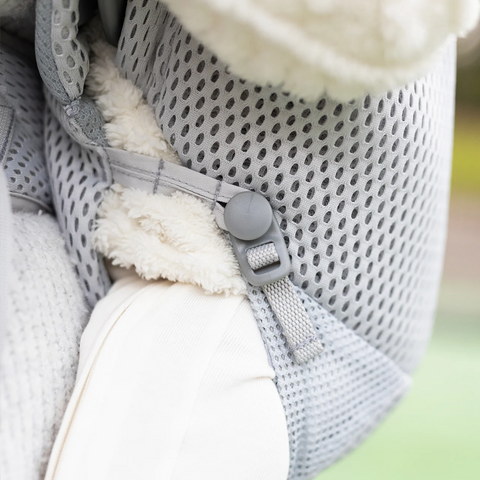
The AirMesh™ panel is there for exactly this. It's a breathable mesh, so heat can escape rather than build up between you on a long walk. It's not a licence to overdress them; check the neck.

BABYGO® AirMesh™ Baby Carrier
3.2kg to 14kg, three carry positions, adjustable leg openings, padded shoulder straps, the AirMesh™ panel and an organic cotton dribble bib on the head rest. Four colourways.
£49
Does a carrier hurt your back
It shouldn't, if the weight is on your hips. The fix for an aching back is almost always the same: loosen everything, put the waist belt on snug so it takes the load, then bring the shoulder straps in until the baby is close. If it still pulls after ten minutes, take them out and refit rather than pushing on.
And swap. The carrier is made to move between wearers, and refitting takes moments, so a walk can change shoulders halfway without anyone getting a numb arm.
Wearing a carrier after a c-section
Usually yes, once the wound has healed and you feel ready; if you're not sure, ask at your postnatal check or ask your midwife. The waist belt sits close to where a c-section scar is, so in the early weeks it can press. Positioning the belt higher, above the scar, helps a great deal. If anything pulls at the wound or feels sharp, stop and take it off.
Carrier or pram
Both, if you can, and for different days of the week.
The carrier wins for shops, stairs, trains, the school run with an older one, and the walk that gets a baby to sleep when nothing else will. The pram wins for long days out, hot afternoons and anyone whose back has had enough.
Questions we get asked
From what age can I use the BABYGO® carrier?
From newborn, once your baby is 3.2kg, up to 14kg. For a newborn the thing that matters isn't age but position: high enough to kiss, face in view, knees higher than bottom, and the seat narrowed to fit knee to knee.
Is it safe to use a baby carrier?
Yes, fitted to the T.I.C.K.S. rules the NHS and the Lullaby Trust both use: tight, in view, close enough to kiss, chin off the chest, back supported. Nothing over their head, and no feeding in it.
Can my baby face outwards in the carrier?
Once they hold their head up steadily on their own, for short spells. Turn them back to face you when they get tired, and always for sleep, so you can see their face.
Can I use the carrier after a c-section?
Once the wound has healed and you feel ready; ask at your postnatal check if you're not sure. Sit the waist belt above the scar, and stop if anything pulls.
Can my partner use the same carrier?
Yes. The straps and waist belt adjust across a wide range of body shapes, and swapping takes moments, so one carrier does both of you and a walk can change shoulders halfway.
Do I need a baby carrier if I have a pram?
Not need, but most people end up glad of both. The carrier is for the places a pram can't go and the naps that only happen upright against you; the pram is for the long days.
Next step: the AirMesh™ carrier comes in four colourways, all in the carrier collection, and once they start crawling the baby proofing checklist is the next page you'll want.
Filed under Pregnancy