
C-section recovery week by week (UK)
Healing after a caesarean week by week, with the NHS milestones for driving, lifting and exercise, and what actually helps at each stage


You're home, or nearly home, with a new baby and a cut along your bikini line, and everything between your ribs and your knees feels like it belongs to someone else. Getting off the sofa is a project. Laughing hurts. Someone has said "six weeks" and you'd like to know what six weeks actually looks like, day by day.
This is the timeline we'd send a friend. The milestones are the NHS ones, linked so you can read them yourself, and the rest is what we've learnt from the c-section recovery orders that leave here and the reviews that come back.
Quick answer: Most women are home 1 or 2 days after a c-section, walking (slowly) from the first day, and back to most normal things by about 6 weeks. Driving, lifting anything heavier than your baby, exercise and sex wait until you can do them without it hurting, which the NHS says may not be for 6 weeks or so. The scar keeps fading for months after that.
The numbers that don't move:
- Most women leave hospital 1 or 2 days after a caesarean, according to the NHS.
- The catheter stays in for at least 12 hours and the wound dressing for at least 24 hours.
- Non-dissolvable stitches or staples come out after 5 to 7 days, usually with your midwife.
- Your postnatal check is at 6 to 8 weeks, at your GP surgery.
- Driving, heavy lifting, exercise and sex come back when you feel able and they aren't uncomfortable, which the NHS says may not be for 6 weeks or so.
What actually happens in a c-section
Some are planned weeks ahead, some are decided in the middle of labour, and the operation is much the same either way. You'll normally have a spinal or an epidural, so you're awake and numb from the chest down.
The cut is 10 to 20cm long, across your tummy just below the bikini line, and the whole thing takes around 40 to 50 minutes. You'll feel tugging and pressure rather than pain.
It's major abdominal surgery. That's the bit worth holding onto when you're wondering why you can't just get on with things. Nobody would expect you to bounce back from any other operation with a newborn in your arms.

Just had your baby? Get 10% off your first order and the postnatal recovery emails as they land.
How long do you stay in hospital after a c-section?
Most women leave 1 or 2 days after the operation, according to the NHS caesarean recovery page. Longer if you or your baby need watching.
The catheter stays in your bladder for at least 12 hours, the dressing stays on your wound for at least 24 hours, and you'll be helped out of bed and onto your feet as soon as possible. That feels far too soon and is done on purpose: moving is how you lower the risk of a blood clot in the first day or two.
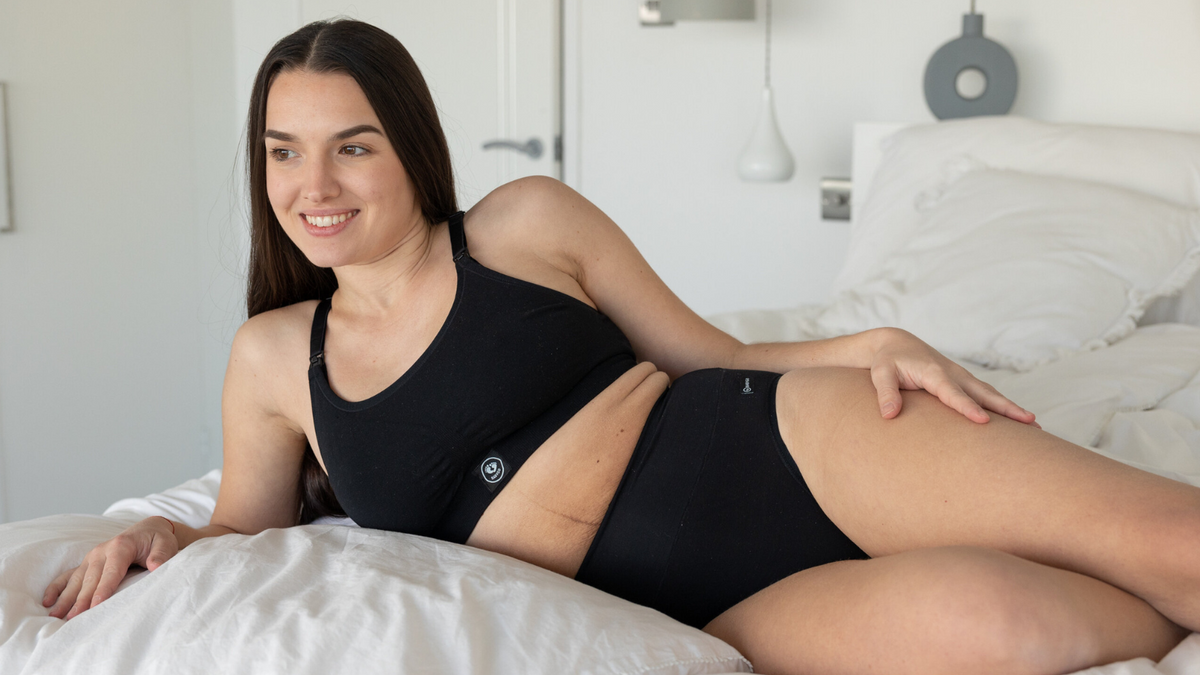
Bring high-waisted knickers to wear over the dressing. A waistband that sits above the cut matters from day one; more on that further down.
What the first few days feel like
Numb, then sore. The spinal takes a few hours to wear off, and the first time you stand you'll be bent over like a question mark. Straighten up gradually. Hold a pillow, or a folded towel, against your tummy when you cough, laugh or sneeze. Trapped wind after abdominal surgery is real, and walking shifts it better than lying still.
You'll bleed, even though the baby didn't come out that way. It's the lining of the womb clearing, and it goes on for a few weeks. A peri bottle saves you reaching and twisting to keep clean on the toilet at a point when bending is hard. It's the least glamorous thing on the list and people are oddly grateful for it.
For feeding, lying on your side or the rugby-ball hold, with the baby tucked under your arm, keeps their weight off the wound. Ask the midwives to set you up before you leave. That's what they're there for.
C-section recovery week by week
Everyone heals at their own pace, so treat this as the shape of it for many people rather than a test to pass. The NHS milestones are the ones that don't move.
| Stage | Where you'll be | What's happening | NHS milestone | What helps |
|---|---|---|---|---|
| Days 1 to 3 | Hospital, then home for most | Numb, then sore. Up and walking with help. Bleeding starts. | Catheter out after at least 12 hours; dressing off after at least 24 hours; most women home after 1 or 2 days | High-waisted knickers over the dressing, a peri bottle, someone else doing all the lifting |
| Week 1 | Home, midwife visiting | Sore to stand straight; the wound feels tight; a new kind of tired | Non-dissolvable stitches or staples out after 5 to 7 days; clean and dry the wound every day; nothing heavier than your baby | Loose clothes and cotton underwear, a short daily walk, painkillers on time |
| Week 2 | Home, getting out a bit | Scar can feel tight, numb or itchy; walking further; still no lifting | Keep the wound clean and dry; keep up the daily walk | High-waisted leggings, a pillow to hold when you cough |
| Week 6 | Out and about | Most everyday things feel normal again; the wound has closed | Postnatal check at 6 to 8 weeks at your GP surgery; driving, lifting, exercise and sex when you feel able, which may not be for 6 weeks or so | A recovery belt if you want one, now the wound has healed |
| Week 12 | Back to most things | Scar still red but fading; the deeper layers are still healing | The NHS says the scar should fade with time and is often hidden by your pubic hair | Build exercise back up gradually; ask about a pelvic health physio if anything still feels wrong |
On painkillers: take them on time rather than waiting for the pain to arrive. The NHS says aspirin and the stronger painkiller codeine aren't usually recommended if you're breastfeeding, so check what you're sent home with and ask if you're not sure.
Getting in and out of bed is its own skill in the first fortnight. We've written up the positions and the getting up in how to sleep after a c-section.
What to wear after a c-section
Nothing that sits on the cut. That rules out most of your normal knickers and anything with a waistband at bikini height.
The NHS line is loose, comfortable clothes and cotton underwear; in practice it means a high waist on everything for the first few weeks, starting with knickers that sit above the usual bikini-line cut so no seam rests on the wound, worn from straight after birth over the dressing.
The full day by day, from the trip home to when leggings and a belt come in, is in what to wear after a c-section.

BABYGO® Postpartum Knickers
The high waist clears the scar from day one, and the anti-leak gusset handles the bleeding. Sold singly or as a five pack, sizes S to XL. Order one size up: they need enough fabric to reach. Knickers can't come back once the pack's open, for hygiene reasons, so check the size guide first.
From £11
Driving after a c-section
The NHS says you won't be able to drive for a few weeks, and the honest test is this: could you slam on the brakes in an emergency without flinching? If not, you're not ready. For most people it lands somewhere around the 6-week mark, but it's when you can do it comfortably, not a date on the calendar.
Two other things. If you're still on painkillers that make you drowsy, don't drive. And it's worth a two-minute call to your insurer to ask whether they have a rule about recent surgery, so you know before you're back behind the wheel.
Lifting after a c-section
Nothing heavier than your baby is the NHS rule, and it's a good one because it's easy to remember and hard to argue with. The things that catch people out are the car seat with the baby in it, the pram up a step, a full washing basket, and a toddler who wants picking up.
For the toddler, sit down and let them climb onto you. For everything else, someone else, for now. A belt makes moving around more comfortable; it doesn't mean the lifting rule stops applying, and we'd rather you knew that before you bought one.
When can you wear a postpartum belt after a c-section?
Not straight away. After a c-section a belt waits until the wound has healed and you feel ready; if you're not sure, ask at your postnatal check or ask your midwife. Anything that pulls at a fresh scar is a bad idea, however much you'd like your middle held together.
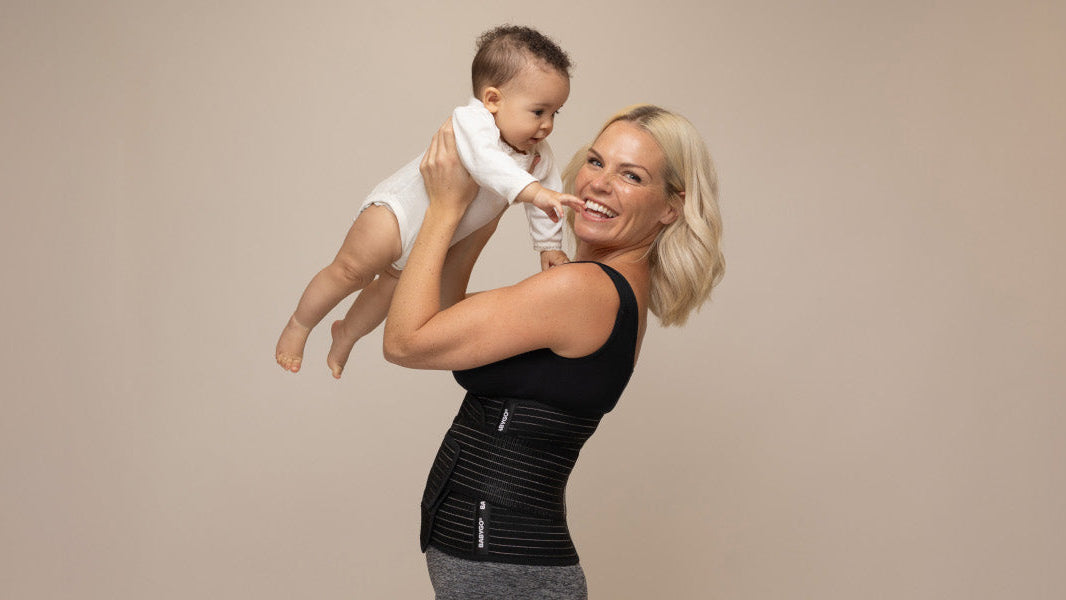
From then on, the Comfort+ belt is the gentle one: light, everyday support that makes walking, standing and getting up more comfortable, not something that closes a gap in your tummy muscles.
If that gap is your worry, a pelvic health physio is the person to see, and a belt makes their exercises easier rather than replacing them. Which belt, how to wear it and what it won't do are all in do postpartum belts really work.

BABYGO® Postpartum Comfort+ Belt
Gentle everyday support once your wound has healed. One Size or XL; take the XL if you're between the two or plus size, and order for your body now, not your pre-pregnancy size. Fitted right it sits flat and low and stays put; if it rolls, it's too high or tighter on one side.
£29
One reviewer wrote: "I did not expect it'd help me so much with the recovery. It's so comfortable and I can move around a lot more once I put it on." That's the job. Comfort, so you can move. Not a cure for anything.
When to call your midwife or GP
Most recoveries are boring in the best way. Contact your midwife or a GP straight away if any of these turn up, because they're the signs the NHS lists for an infection or a clot:
- severe pain, or the wound getting more red, painful or swollen
- pus or discharge from the wound
- heavy vaginal bleeding
- leaking urine, or pain when you wee
- a cough or shortness of breath
- swelling or pain in your lower leg
A high temperature or feeling shivery goes on that list too. You know your body; if something feels wrong, ask. It's a phone call, and it might be nothing.
Questions we get asked
How long does a c-section take to heal?
The wound closes in the first couple of weeks and you'll feel mostly yourself by around 6 weeks, which is when the NHS says driving, exercise and sex are usually back on the table.
The deeper layers keep healing for months after that, and the scar goes from red and obvious to something much fainter with time. Pain that gets worse rather than better at any point is a reason to ring, not to wait.
When can I drive after a c-section?
When you can do an emergency stop without pain and you're off any painkillers that make you drowsy. The NHS says that may not be for 6 weeks or so. Ask your insurer as well.
What is the c-section pooch, and does it go?
The soft shelf that sits above the scar. Some of it is swelling, which settles over the first few months, and some is skin and scar, which softens with time. High-waisted knickers that don't cut across it are the practical fix now; a pelvic health physio can advise on the muscles underneath.
When can I exercise after a c-section?
The NHS puts exercising on the same list as driving, lifting anything heavier than your baby and sex: start again when you feel able and it isn't uncomfortable, which may not be for 6 weeks or so.
A daily walk is different, and the NHS asks you to keep doing that from the start to lower the risk of a clot. Anything that pulls on your stomach waits, and your postnatal check is the natural point to ask about more.
When you're ready to sort what you'll wear, the c-section recovery collection has the knickers, leggings and belts in one place, and the belt size guide tells you which size before you order.
Filed under Postpartum