Birthing balls for pregnancy, labour and after the birth
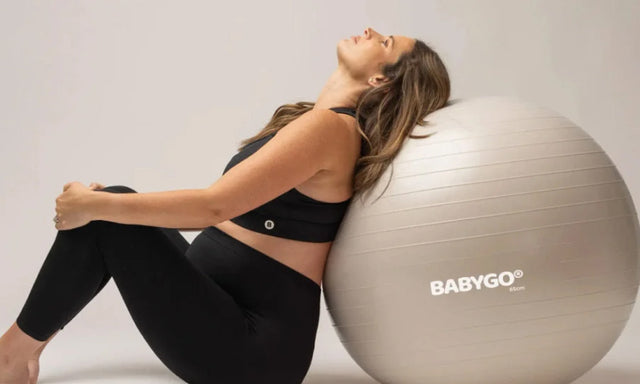
A birthing ball is a better seat than the sofa once your back or hips start to ache, and gentle bouncing and hip circles on it keep you moving through the last weeks and into labour. After the birth, it's a good way to bounce a baby to sleep. BABYGO® is an NHS supplier, and the ball on this page is the one we supply to NHS hospitals.
Ours is built for it: it's tested to hold up to 1000kg and it's anti-burst, so a puncture lets it down slowly rather than bursting under you. Every ball comes with our 100-page Pregnancy Book, which has more than 40 exercises for it through each trimester, then covers labour and the weeks after.
The peanut ball does a different job: it's mostly for lying on your side in labour with your top leg resting over it, which is useful if you've had an epidural and need to stay in bed. The bundle adds a stability ring that stops the ball rolling away on a hard floor, the electric pump saves you the pumping, and the old logo balls are the same tested ball with our previous logo on it.
Questions, answered.
What size birthing ball do I need?
Go by your height. The 65cm suits you up to about 5ft 8 (173cm) and the 75cm from 5ft 10 (178cm); in between, either works, with the 65cm sitting lower and bouncing more, and the 75cm better for long legs or a desk. Once it's inflated, your hips should sit a little higher than your knees with your feet flat on the floor.
When should I start using one?
Whenever sitting starts to ache; there's no set week. Earlier on it's a kinder seat than the sofa for a sore back or pelvis, and in the last few weeks it keeps you upright and moving. If you've been told to take things easy, check with your midwife before you start the exercises.
Can a birthing ball bring on labour?
It won't start labour on its own. What it does is keep you upright and moving through the last weeks and give you positions to use once labour starts, and the Pregnancy Book in the box covers labour as well as each trimester.
What's the difference between a birthing ball and a peanut ball?
A birthing ball is for sitting upright and moving your hips; a peanut ball is mostly for lying down, holding your top leg in position between contractions, especially after an epidural. Plenty of people bring both.
How is it different from a gym ball?
It's made to a different standard. As well as the 1000kg load test and the anti-burst design, the wall is 2mm thick, and the material is tested to EN 71-3 and free from BPA and phthalates.