

How to get your baby into the optimal position
The position midwives hope for is head down with your baby's back towards your front. Most babies get there by about 36 weeks


Thirty-four weeks, and the midwife has written something in your notes. "Ceph", maybe "OP", maybe "breech". Now you're on your phone at 11pm trying to work out whether you're meant to be doing something about it.
Here's what those words mean, what the NHS and the RCOG actually say about babies turning, and the honest list of what you can and can't do about it. It's shorter than the internet's list. That's the point.
Quick answer: The position midwives hope for is head down with your baby's back towards your front. Most babies get there by about 36 weeks, when your midwife starts feeling your bump to check. You can't make a baby turn. You can sit upright, lean forward, keep moving and sleep on your side. Breech at 36 weeks, and you'll usually be offered an ECV, which works for about half of women.
Key facts
- From 36 weeks your midwife will ask to feel your bump to check your baby's position at every appointment (NHS antenatal schedule).
- The RCOG says most babies turn head first on their own by 36 to 37 weeks, and only 3 to 4 in every 100 are still breech towards the end of pregnancy.
- If your baby is breech at 36 weeks you'll usually be offered an ECV. The NHS calls it a safe procedure, though it can be a bit uncomfortable; the RCOG puts its success at about 50%.
- The RCOG says there is no scientific evidence that lying down or sitting in a particular position helps a breech baby turn.
- The NHS says sitting on a birth ball helps you into a more upright position, which helps bring your baby's head further down into the pelvis. That's posture and comfort, not turning.
What is the best position for your baby to be in for birth?
Head down, with their back towards your front and their chin tucked to their chest. Midwives write it as OA, occiput anterior, or LOA if the back is a little to your left, which is the most common version. The reason it's the one they hope for is mechanics: with the chin tucked, the smallest part of the head leads the way through the pelvis.
It isn't the only position babies are born from safely. Plenty arrive back to back, and some arrive breech with a planned team around them. Position is one thing among many that shape a birth, not the thing.
| Position | What it means | What usually happens |
|---|---|---|
| Anterior (OA) | Head down, back towards your front | The one midwives hope for. Chin tucked, smallest part of the head first. |
| Posterior (OP, "back to back") | Head down, back against your back | Many turn during labour. Can mean more backache and a longer labour. |
| Breech | Bottom or feet first | Checked at 36 weeks and an ECV usually offered. Then a planned caesarean or a planned vaginal breech birth (NHS, RCOG). |
| Transverse | Lying sideways across the womb | The NHS says most turn head down by the third trimester. Still sideways near your due date, and you'll most likely be advised to have a caesarean. |
Most people reading this have a baby in one of the first two rows.
Follow your bump. Tell us your due date and we'll send what to expect each week, plus 10% off your first order.
When does your baby get into position?
Later than you'd think, and they change their minds. The NHS says babies often twist and turn during pregnancy, and most will have moved head down by the time labour begins. The RCOG puts the usual turning point at 36 to 37 weeks, which is why 36 weeks is when your midwife starts asking to feel your bump to check.
Before that, a baby lying breech or sideways at 28 or 32 weeks is normal and not something anyone will act on. There's room, and they use it.
After 36 weeks there's less room, so a baby who's still breech is less likely to turn on their own, which is why that's the week the ECV conversation happens. Not impossible, though. Some turn late, and some turn after everyone has stopped expecting them to.

What can you do to encourage a good position?
Less than the internet says, and it's worth being straight about that first. The RCOG's breech leaflet says there's no scientific evidence that lying or sitting in a particular position helps your baby turn, and nobody has shown that any home method does. So none of what follows is a promise.
What it is: a set of habits that keep you comfortable, keep your pelvis moving and, in the NHS's words about the birth ball, help you into an upright position that helps bring your baby's head further down into the pelvis. Head down and settling into the pelvis is a good place to be at 38 weeks whatever else happens.
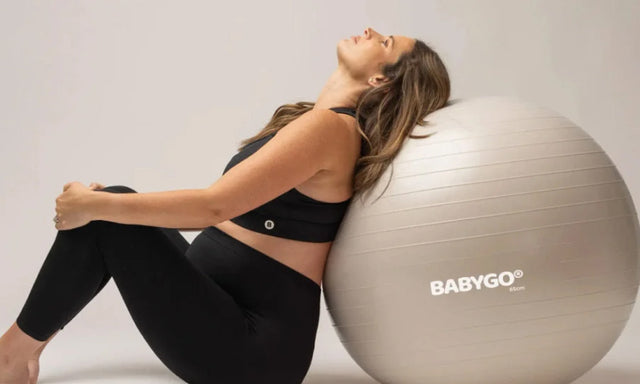
- Sit upright, knees lower than hips. A dining chair, not the deep sofa. On a birthing ball you can't slump, which is why it's a good seat for the last months.
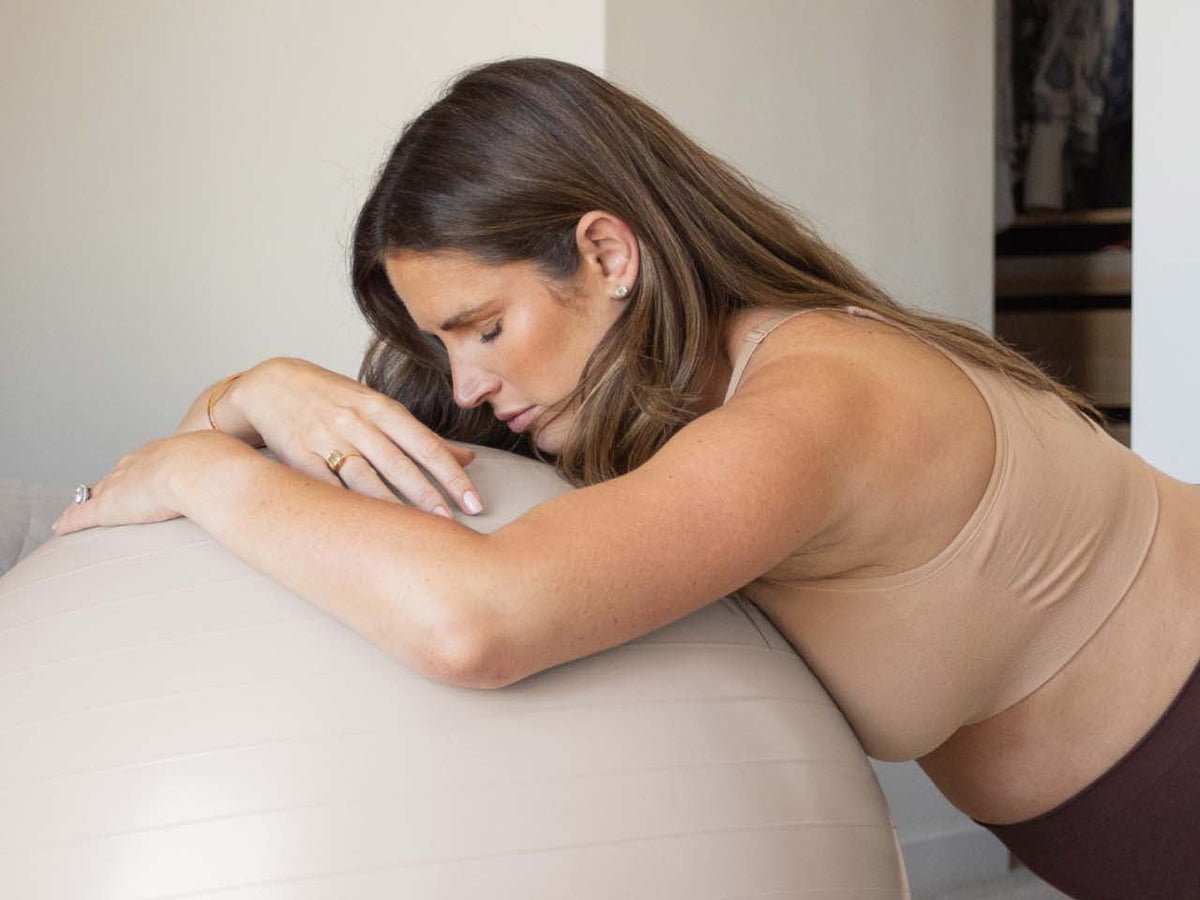
- Lean forward. Kneeling and leaning over the ball, or over a pile of cushions, takes the weight off your back and is the position most people end up in during contractions anyway.
- Sleep on your side. The NHS says the safest position to fall asleep from 28 weeks is on your side, either side, and suggests a pillow between your knees and one under the bump. Which side is up to you.
- Walk. Every day, at a comfortable pace. The NHS says 30 minutes a day can be enough and any amount beats none.
- Change position often. An evening on the sofa does no harm. Hours in the same slumped position every day isn't kind to your back, whatever it does or doesn't do for your baby.
None of that turns a baby. All of it makes the last weeks easier.


BABYGO® Birthing Ball
A seat you can't slump on, for sitting tall, swaying and leaning forward in the last months. Anti-burst, in 65cm and 75cm, with a pump, spare plugs and our 100 page pregnancy book in the box. It's for comfort and posture, not for turning babies; nothing is.
From £29 · Sold out
What exercises help?
The ones that keep your pelvis moving and get you used to the forward lean: hip circles on the ball, pelvic tilts on all fours, and the kneeling hug over the ball. All three are in our pregnancy ball exercises post with a trimester note on each, so they live there rather than here.
The inversions and "spinning" routines you'll see online are a conversation with your midwife, not a home experiment, especially if your blood pressure is being watched or you've been told anything about your placenta.
What if your baby is back to back?
Back to back, or posterior, means head down but facing your front, with their spine against yours. It's common in late pregnancy and it isn't a problem to be fixed. It's a position that often changes.
What midwives will tell you is that many back to back babies rotate during labour, and that the ones who don't can still be born vaginally. The trade is usually more backache and a longer first stage, which is why the forward lean and staying upright matter more if this is you.

What if your baby is breech?
Breech means bottom or feet first. The RCOG says only 3 to 4 in every 100 babies are breech towards the end of pregnancy, and most turn head first by themselves by 36 to 37 weeks.
If yours hasn't, the NHS says you'll usually be offered an external cephalic version, an ECV, at 36 weeks: a healthcare professional tries to turn your baby head down by pressing on your abdomen. The NHS calls it a safe procedure, though it can be a bit uncomfortable.
The RCOG says it works for about 50% of women, and that straight afterwards there's a 1 in 200 chance of needing an emergency caesarean because of bleeding from the placenta or changes in the baby's heartbeat. Your team will go through all of that with you before you decide.
If the ECV doesn't work or isn't for you, the options are a planned caesarean or a planned vaginal breech birth. Moxibustion is the one other method the RCOG mentions: it says there's some evidence it may help, and it's something to raise with your midwife rather than try alone. The full pages are the NHS breech page and the RCOG breech leaflet.
Can a peanut ball help in labour?
A peanut ball is the one pinched in the middle, and it's for lying down rather than sitting. It goes between your knees while you're on your side, holding the top leg up so your pelvis stays open, which is exactly what you lose if you've had an epidural and can't get upright.
Midwives use them for that reason, and plenty of units have their own. Ours is one size for labour, and the peanut ball for labour post covers the positions and when to inflate it.

BABYGO® Peanut Ball for Labour
For side lying in labour, especially with an epidural: it sits between your knees and keeps your pelvis open while you rest. One size, 50cm, with a foot pump, spare plugs and our labour book in the box.
£29
When to speak to your midwife
Any time you're worried, and specifically if you're at 36 weeks and have been told your baby isn't head down, if you've been told breech or transverse at any point, if you've got pelvic pain that's stopping you moving, or if you want a physio's eye on positions and exercises. Ask anyway. Reassurance is part of what the appointments are for.
And the one that doesn't wait: if your baby's movements slow down, stop or change, the NHS says call your midwife or maternity unit straight away, even at night. Don't wait to see.
Questions we get asked
How can I tell what position my baby is in?
Not reliably on your own. Kicks up under the ribs often mean head down, and a lot of movement at the front can mean back to back, but people get it wrong all the time. From 36 weeks your midwife feels your bump at every appointment to find the head, the back and the bottom, and if there's any doubt you'll be offered a scan.
At what week should baby be head down?
Most are by 36 to 37 weeks, which is why that's when the checks start. Some turn later. If yours is still breech at 36 weeks, your midwife will talk you through the ECV.
What does the fetal position mean?
Two things, depending on who's saying it. In everyday use it's the curled up, knees to chest shape babies take in the womb, and the way plenty of adults sleep. In your maternity notes it means the way your baby is lying for birth: head down or breech, and which way they're facing.
What's the success rate of ECV for breech babies?
About 50%, according to the RCOG. Your team will go through the benefits and risks with you before you decide.
Does the baby's position make labour easier?
It can. With the head down and the chin tucked, the smallest part of the head leads through the pelvis, which is the mechanical reason midwives hope for that position. But plenty of people have straightforward births with back to back babies, and plenty with perfectly placed babies have long ones. Position is one factor. It isn't the story.
If you're sorting the last weeks, the birthing ball collection has the ball and the peanut ball together, and the size guide takes a minute.
Filed under Pregnancy