Exercise after birth: when to start and what order to build back
A realistic timeline for returning to exercise after a vaginal birth or a c-section, what to check for first, and the order to rebuild in


Three weeks in. You've walked to the shop and back, it felt like a half marathon, and someone in the baby group is apparently already back at the gym. Your midwife said take it easy, which isn't a plan.
This is the plan. When the NHS says you can start, what to check before you do, and the order to build back in, whether you had a vaginal birth or a c-section. It's slower than the internet wants and quicker than doing nothing.
Quick answer: After a straightforward birth the NHS says you can start gentle exercise as soon as you feel up to it: walking, gentle stretches and pelvic floor squeezes. Anything high impact waits until you've had advice at your postnatal check. After a c-section it takes longer, and anything strenuous waits until you've spoken to your midwife, health visitor or GP. The order: pelvic floor, walking, deep tummy, strength, then impact.
- Straightforward birth: gentle exercise as soon as you feel up to it, the NHS says, and advice at your 6-week postnatal check before high impact exercise such as aerobics or running.
- Your ligaments and joints stay more supple for a few months after the birth, so stretching or twisting too far carries more risk of injury. Also the NHS.
- The gap between your tummy muscles is common, usually about 2 finger widths, and the NHS says it usually goes back to normal by the time your baby is 8 weeks old.
- Swimming waits until 7 days after your postnatal bleeding has stopped.
- After a c-section: a daily walk from the start, nothing heavier than your baby, and exercise when you feel able, which the NHS says may not be for 6 weeks or so.
When can you exercise after giving birth?
Sooner than you'd think for the gentle stuff, later than Instagram suggests for the rest. The NHS keeping fit and healthy with a baby page says that after a straightforward birth you can start gentle exercise as soon as you feel up to it: walking, gentle stretches and pelvic floor exercises.
"Feel up to it" is doing a lot of work in that sentence. For some people that's day three, a slow lap of the block with the pram. For others it's week three. Both are normal.
For anything high impact, such as aerobics or running, the NHS says it's usually a good idea to get advice at your 6-week postnatal check first. That's advice, not a locked gate: the check is where someone can tell you how your pelvic floor and tummy are doing.
If you had a more complicated delivery or a caesarean, the NHS says recovery takes longer, and to talk to your midwife, health visitor or GP before anything strenuous.
Just had your baby? Get 10% off your first order and the postnatal recovery emails as they land.
What to check before you start
Your back and core are weaker than they were. Months stretched around a baby, which is why the order below starts with them and not with squats.
Your joints are still loose. The NHS says your ligaments and joints stay more supple for a few months after the birth, so stretching or twisting too far carries more risk of injury.
Your bra doesn't fit. The NHS says your back and cup size have probably changed, so get measured.
Your bleeding is a signal. If it gets heavier or turns bright red again after you've been active, ease off and mention it to your midwife.
The gap in your tummy. It's common for the two muscles down the middle of your stomach to separate in pregnancy, usually about two finger widths. The NHS post-pregnancy body page has the check: lie on your back, knees bent, lift your shoulders slightly and feel above and below your belly button for how many fingers fit in the gap.
Leaking or heaviness. If you leak when you cough, or there's a heavy, dragging feeling between your vagina and your bottom, that's the pelvic floor asking for the exercises below first, and worth telling your GP or health visitor, or raising at your postnatal check.
The order to build back in
Everyone heals at their own pace, so treat this as the shape of it for many people rather than a test to pass. The NHS milestones are the ones that don't move.
| Stage | Where many people are | Do | Hold off on |
|---|---|---|---|
| The first two weeks | Home, sore, bleeding, tired in a new way | Pelvic floor squeezes, the side lying tummy breath, getting up and about, short walks when you feel up to it | Anything that makes you brace or hold your breath |
| Weeks 2 to 6 | Out with the pram, walking further | Longer walks, a brisk pram push, stairs, gentle stretches, the NHS stomach exercise | Sit-ups, planks, running, jumping, heavy lifting |
| After your postnatal check | Most everyday things feel normal | A postnatal class, swimming (7 days after bleeding stops), bodyweight strength, gentle yoga or pilates | Impact, until a cough or a jump doesn't leak |
| From about 3 months | Building | Running, gym classes and weights, built up over weeks, not days | Anything that leaks, hurts, or makes your tummy dome |
The order matters more than the dates. Pelvic floor before everything, because it has to hold up whatever you do on top of it. Walking before running. Deep tummy before sit-ups, which the NHS says to avoid to start with, along with planks and high impact.
Pelvic floor and deep tummy first
These are the two exercises the NHS gives on its post-pregnancy body page. You can do them in bed, feeding, or in the queue at Boots.
Pelvic floor. Squeeze and draw in your bottom as if you're holding in wind, then squeeze around your vagina and bladder as if you're stopping a wee. Long squeezes: hold as long as you can, no longer than 10 seconds, then relax. Short squeezes: quick squeeze, let go, repeat until the muscles tire.
The NHS target is to build up to 10 of each, at least 3 times a day. Keep breathing normally, and don't pull your stomach in at the same time.
Deep tummy. Lie on your side with your knees slightly bent. Breathe in gently, and as you breathe out draw in the lower part of your stomach like a corset, squeezing your pelvic floor at the same time. Hold for a count of 10, breathing normally, then release. Up to 10 repeats.
That corset breath is the one to do instead of sit-ups. The NHS says regular pelvic floor and deep stomach exercises can help reduce the gap, and standing up tall helps too. If the gap is still obvious 8 weeks after the birth, contact your GP, who can refer you to a physiotherapist.
A belt won't close the gap and nothing you wear will; it makes the day more comfortable while you do the exercises that do. Do postpartum belts really work has the honest version.
Walking is the exercise
For the first six weeks or so, the walk is the workout, and the NHS treats it that way. Push the pram briskly, arms bent, back straight, handles at elbow height. Take the stairs. Bend your knees, not your back, to pick things up.
If you're breastfeeding, the NHS says a brisk 30 minute walk each day, with a healthy balanced diet, will not affect the quality or quantity of your milk.
This is the stage a belt earns its place: the hours you're up and walking. The Comfort+ is the gentle everyday wrap and the one most people choose after a c-section. The Support+ is the firmer one.
After a vaginal birth, start whenever you feel ready, which for many people is within the first few days. After a c-section, once the wound has healed and you feel ready; if you're not sure, ask at your postnatal check or ask your midwife. Wear it less as you get stronger.

BABYGO® Postpartum Comfort+ Belt
The everyday one for the walking weeks: gentle, even hold, two straps you loosen or firm up as your body settles, soft bamboo lining, and the BABYGO® Postpartum Book in the box with core and pelvic floor exercises week by week. One Size (dress 8 to 16) or XL (18 to 24).
£29
One reviewer wrote: "I did not expect it'd help me so much with the recovery. It's so comfortable and I can move around a lot more once I put it on." Moving around more is the job. It isn't a cure for anything.
Exercise after a c-section
A c-section is abdominal surgery, and the NHS caesarean recovery page sets the pace. Stay mobile and do gentle activities such as a daily walk while you're recovering, to reduce the risk of blood clots, without overexerting yourself. Carry nothing heavier than your baby.
Exercising is on the same NHS list as driving and sex: only start again when you feel able and it isn't uncomfortable, which may not be for 6 weeks or so. Ask your midwife if you're not sure.
In practice: pelvic floor squeezes from the first days, because they don't pull on the incision, then the walk, then the corset breath once it doesn't tug. Anything that makes you brace across the incision waits until it's healed: a sit-up, a heavy car seat, getting up without rolling to your side first.
The NHS says to contact your midwife or a GP straight away if you get severe pain, heavy vaginal bleeding, a wound that's more red, painful or swollen or leaking pus, pain when you wee or leaking urine, a cough or shortness of breath, or swelling or pain in your lower leg. Those can mean infection or a clot.
The wider recovery, week by week, is in recovery from a c-section, and the clothes that don't sit on the incision are in what to wear after a c-section.
Postnatal yoga, pilates and classes
A lot of people land here from a search for postnatal yoga, and it's a good early route back: gentle stretching, breathing, being in a room with other adults. The NHS suggests a postnatal class, many of which let you bring the baby.
One NHS rule if the class isn't a postnatal one: tell the instructor you've recently had a baby, so they don't push you into twists your loosened joints don't need yet.
The poses that suit the early weeks are the unglamorous ones. Child's pose for the lower back. Cat and cow on all fours, slowly. The corset breath from above. Big twists and anything with a plank in it wait.
On weight loss: the NHS says the way to lose weight after a baby is a healthy, balanced diet and regular, moderate exercise, such as a brisk daily walk. No pose burns off a pregnancy.
Mood is the other reason. The NHS says regular activity may help prevent postnatal depression and gentle exercise can boost your mood. If you're struggling to cope, talk to your midwife, health visitor or GP.
Running, the gym and lifting weights
Running. It's high impact, and the NHS says to get advice at your postnatal check before you start. The test that matters is your pelvic floor: if a cough, a sneeze or a star jump leaks, it isn't ready for a running stride. Build to it with brisk walks, then walk and jog, then short runs.
The gym. A walk on the treadmill or an easy bike fits the gentle exercise the NHS allows from when you feel up to it. Classes, jumping and anything with a barbell wait for the postnatal check advice.
Weights. Begin far lighter than you're used to, and breathe out on the effort rather than holding your breath, because bracing loads the pelvic floor and the tummy gap. If your tummy domes down the middle or you leak, go lighter.
What to wear to exercise after birth
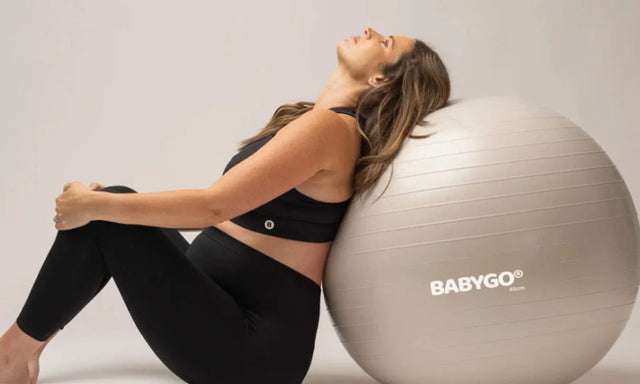
Two things from the NHS list first: a sports bra you've been measured for, and shoes that fit the feet you have now. Then the bit we get asked about, which is leggings.
Ordinary leggings dig into a tender tummy or slide down under it. What you want is a high, wide waistband that holds evenly and sits above any incision, in a fabric that isn't see-through when you squat or bend to the pram. Ours are cut for that: a U-shaped compression band across the front, and the front cut higher than the back so it sits well above the usual c-section incision line.
Because the hold is compression, after a c-section they wait until you're healed and comfortable. Order your dress size now, not your old one, and if you're between sizes take the bigger.

BABYGO® Postpartum Leggings
High, wide waistband with a U-shaped compression band, front cut higher than the back, thick and opaque for squats and the pram. Sold singly or as a twin pack, sizes S to XXL (dress 6 to 18). For once you're healed and comfortable.
From £29
One reviewer wrote: "Feels comfortable with a good firm hold around the tummy. Just what I needed."
Questions we get asked
Can I go to the gym after giving birth?
For a walk on the treadmill or an easy bike, as soon as you feel up to it after a straightforward birth. For classes, jumping and weights, the NHS says to get advice at your postnatal check first. Tell the instructor you've recently had a baby.
Can I lift weights after having a baby?
Yes, built up over weeks from far lighter than before, breathing out on the effort. If your tummy domes or you leak, go lighter. After a c-section, nothing heavier than your baby until the wound has healed and you feel ready.
Can I exercise while breastfeeding?
Yes. The NHS says a brisk 30 minute walk each day, with a healthy balanced diet, will not affect the quality or quantity of your milk. Feed first and get measured for a sports bra, because your size has probably changed.
Does exercise help you lose the baby weight?
Alongside eating well, yes, slowly. The NHS says the way to lose weight after a baby is a healthy, balanced diet and regular, moderate exercise. If you join a weight loss group, tell them you've recently had a baby and whether you're breastfeeding.
When can I swim after giving birth?
The NHS says to wait until 7 days after your postnatal bleeding has stopped. If you take your baby, try to have someone else there to mind them so you get to swim rather than bob.
Can I do sit-ups after having a baby?
Not to start with. The NHS says to avoid sit-ups, planks and high impact exercise at first, while the gap between your stomach muscles closes. Do the corset breath and the pelvic floor squeezes instead, and if the gap is still obvious at 8 weeks, see your GP.
The postpartum collection has the belts, the leggings and the knickers in one place, and the leggings size guide and belt size guide are one table each.
Filed under Postpartum