

How to use a pregnancy pillow: five ways that actually work
Where to put a pregnancy pillow for bump support, hip and pelvic pain, heartburn and after a c-section, plus how to use one if you are a front sleeper


By about 24 weeks the bed has filled up. One pillow under the bump, one between the knees, one wedged behind your back so you don't roll over, and your partner clinging to the edge of the mattress. It works until you turn over, and then it doesn't.
A pregnancy pillow is the tidier version of that arrangement. The box doesn't come with much of an explanation though, and a lot of the questions that land in our inbox are some version of "which way round does it go".
Here are the five ways we'd actually use one. Front sleepers, there's a section for you further down.
Quick answer: Lie on your side, tuck the middle of the pillow under your bump, hug the top end and put the lower end between your knees. That one position does bump, hips and lower back at once. For heartburn, prop your head and shoulders up on it instead. For back ache, turn it round and lean back into it. Either side is fine.
- The NHS advises going to sleep on your side, left or right, from 28 weeks, and suggests pillows to support the bump and one between your knees.
- Five positions: on your side with the knee end in, the knees for hip and pelvic pain, propped up for heartburn, turned round for back ache, and curved round you for feeds after the birth.
- Our Moon pillow is one long curve, so it lies along your side of the bed rather than wrapping all the way round you. One size; if you're shorter, fold the lower end under.
- The cover is 70% bamboo and 30% cotton. It unzips and washes at 30 degrees. The inner doesn't go in the machine.
- Never leave a baby to sleep on or against a pregnancy pillow.
How to use a pregnancy pillow for your bump and hips
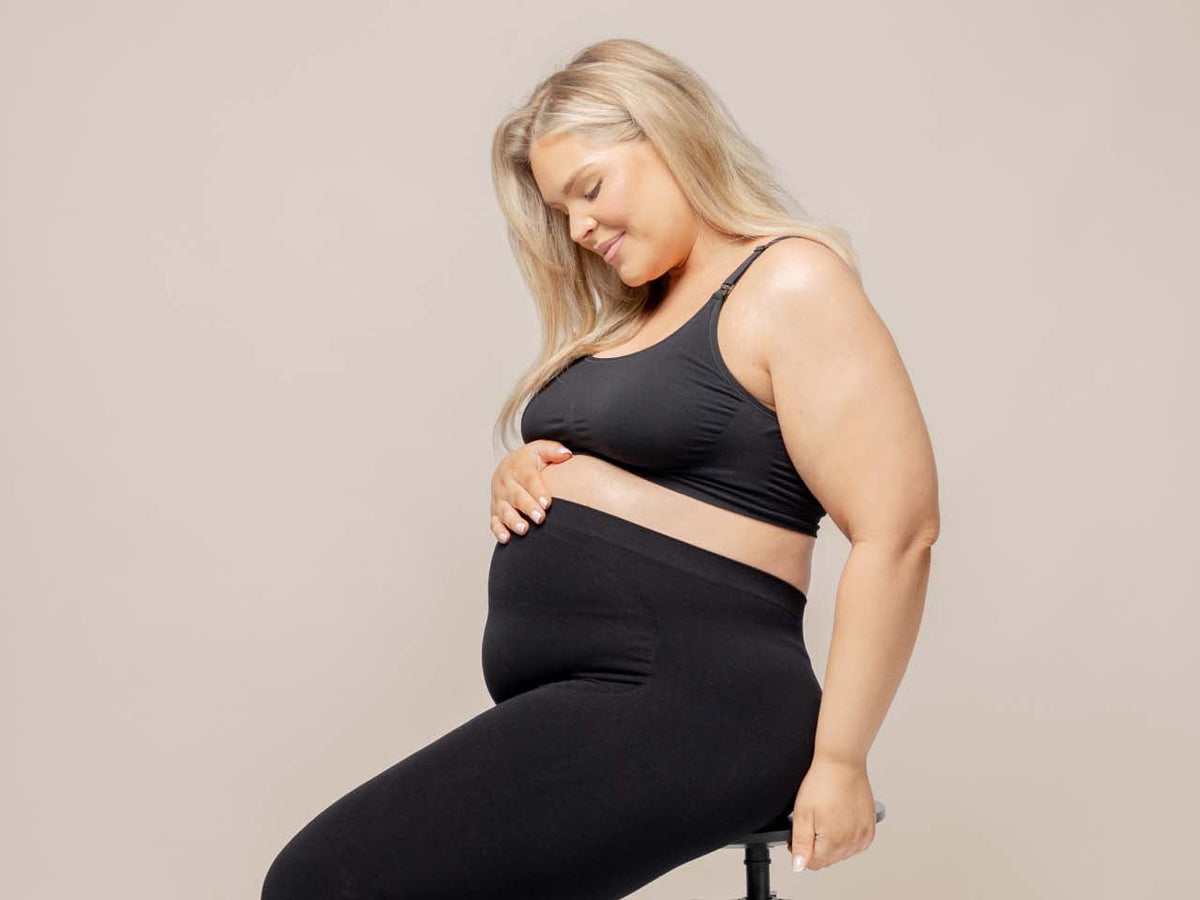
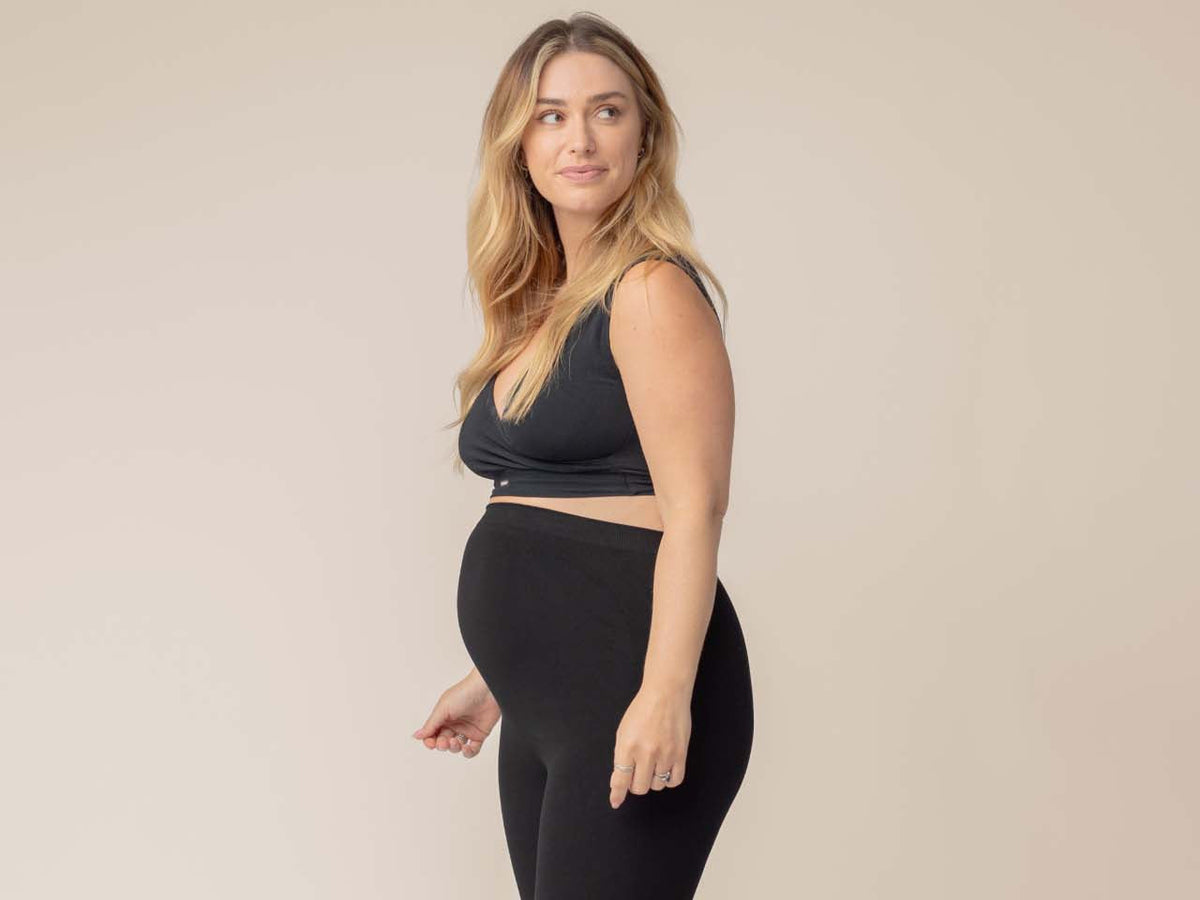
This is the position most people buy it for.
If you only learn one, learn this one.
- Lie on your side. Either side. The NHS says left or right, and that if you wake up on your back you just turn over and go back to sleep.
- Tuck the middle under your bump. The curve takes the weight of the bump, so it isn't pulling on your lower back and your ligaments while you sleep.
- Lower end between your knees. Top knee resting on the pillow, roughly level with your hip. This is the bit that stops your top leg dropping forward and twisting your pelvis, which is what makes your hips ache by morning.
- Hug the top end. Your top arm rests on it instead of across the bump. Some people put their head on it as well; most keep their usual pillow.
Two things to check. The pillow along your front should stop you rolling forward, so if you still wake up on your bump, pull it in closer. And the knee end wants to be between the knees, not the ankles; if it keeps sliding down, it started too low.
Turning over is the part nobody warns you about. With a U-shaped pillow you're already inside it. With a single curve you take it with you: bend your knees, hold the pillow, and roll the whole lot together. It takes about a week to become automatic.
One reviewer wrote: "The cover feels soft and the curved shape works well for side sleeping. I noticed a difference from the first few nights."

BABYGO® Moon Pregnancy Pillow
One curve for bump, back and knees, and it lies along your side of the bed instead of taking it over. One size, with a bamboo and cotton cover that unzips for the wash. It carries on as a feeding pillow and a backrest after the birth.
£39
Follow your bump. Tell us your due date and we'll send what to expect each week, plus 10% off your first order.
Pregnancy pillow for hip pain and pelvic girdle pain
Hip pain at night and pelvic girdle pain (PGP) are mostly the same problem seen from two angles. On your side, the top leg drops forward, the pelvis twists, and the joints complain. The NHS pelvic pain page has "put a pillow between your legs for extra support in bed" on its list of things to try.
So the knee end is the important end.
Keep it between the knees, not just the thighs, and squeeze it as you turn over so your knees stay together and the pelvis moves as one piece. If one hip is worse, sleep with that hip on top so it isn't being pressed into the mattress.
A pillow takes the strain off at night. It doesn't treat PGP; physio does, so ask your midwife for a referral, and ask early. The full post on pelvic girdle pain in pregnancy covers the symptoms, the NHS everyday tips, and when a belt is worth it for the daytime.
Pregnancy pillow for heartburn
Heartburn tends to be worst lying flat, because the growing baby is pressing on your stomach and there's nothing keeping the acid where it belongs. The NHS indigestion and heartburn page suggests propping your head and shoulders up when you go to bed, and says sleeping on your left side can also help.
For this one, use the pillow as the prop rather than as the body pillow. Curve it into a C on the mattress and lie back into the middle of it, so your head, shoulders and upper back are raised together, then turn a little onto your left. Two flat pillows stacked under your head just kink your neck; the curve holds your whole upper body at an angle.
The same NHS page says to eat small meals often rather than three big ones, and not to eat within 3 hours of going to bed. If it won't shift, ask your midwife or GP; there are medicines that are safe to take in pregnancy.
Pregnancy pillow for back ache
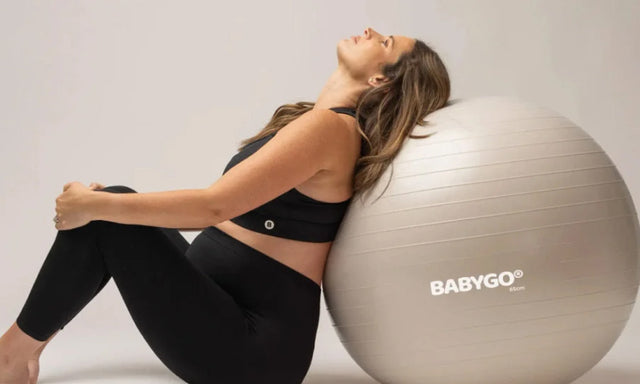
When it's your lower back rather than your hips, turn the pillow round. The curve goes behind you, the middle against the small of your back, and you lean into it on your side, with one end tucked between your knees if it reaches. It stops you rolling onto your back and gives the muscles something to rest against instead of holding you up all night.
On the sofa it's the same trick: curve behind you, feet up. That's the third trimester film position, and it's where the pillow spends most afternoons in a lot of houses.
Back ache that's new and severe, or comes with a fever, bleeding or pain when you wee, is a call to your midwife, not a pillow question. The NHS back pain page lists what to watch for.

Using a pregnancy pillow after a c-section and for feeds
The pillow's second life starts the week you come home. For the first weeks after a caesarean, sleeping on your side with a pillow between your knees and a long one along the front of your tummy means that if you roll in your sleep, you roll onto the pillow rather than onto the incision. The curve does both jobs at once, and if you're shorter, fold the bottom end under rather than fighting the length.
How to get out of bed without pulling on the incision, and which position pulls least in the first fortnight, is its own post. Until then the c-section recovery collection has the knickers and leggings that go with it.
Then feeds. Curve the pillow round your waist so your arms rest at chest height and you're not hunched over the baby; after a section that also keeps their weight off your tummy. Behind your back, it's the backrest for sitting up in bed at 3am, which you'll be doing more than you'd like.
One thing that isn't flexible: never leave a baby to sleep on or against the pillow. Feeds and cuddles with you awake, then back to their own flat, clear sleep space. The Lullaby Trust safer sleep page has the rest.
How to use a pregnancy pillow if you sleep on your front
Front sleepers have the hardest time of anyone, because the one position your body wants is the one the bump rules out. The NHS advice is about your side from 28 weeks; before then it's comfort that decides, and for most front sleepers comfort runs out somewhere in the second trimester, when there's a bump to lie on.
The answer is the three quarter position. Lie on your side, then let yourself roll forward onto the pillow rather than onto the bed. The middle of the pillow takes the bump, your top knee comes up high onto the lower end, and your top arm hugs the upper end. Your chest is partly down, which is the feeling front sleepers miss, but the bump is resting on the pillow, not the mattress.
Pull the pillow in tight so there's no gap to roll into. If you wake up flat on your front with the pillow across the room, you started with it too loose.
Give it a fortnight before you decide it doesn't work.
New sleeping positions take longer to feel normal than you'd think, and the three quarter one is the closest a bump allows. Nobody sleeps well the first night with any of these, so judge it on night ten, not night one.
Which shape of pregnancy pillow do you need?
The old versions of this post spent a lot of words on shapes, so here's the short version.
| Shape | What it does well | The catch |
|---|---|---|
| Wedge | Slides under the bump on your side, or under your head for heartburn. Small, fits any bed | One job at a time. Nothing for the knees |
| Straight full length | A long bolster to hug, with the bottom between your knees | No curve, so it slips as you turn, and nothing behind you |
| J-shaped | Bump and knees, with a hook at the top for your head and neck | Only faces one way, so you turn it round when you turn over |
| Moon or C-shaped | One curve: bump, knees and arm in front, or turned round for your back. Lies along your side of the bed | You take it with you when you turn over |
| U-shaped | Wraps both sides, so you're supported whichever way you turn | Takes most of a double bed, and warm in summer |
We sell the moon shape because it does the side position and the propped up position with one pillow, and it doesn't evict your partner. One reviewer put it this way: "It gives good support for the bump and hips, the cover is easily removable for washing."
If you're shorter than average, fold the lower end under rather than stretching out along the whole length; you get the same bump, back and knee support in a shorter footprint. If you're tall and want your head on it too, you'll probably keep your normal pillow for that.
When should you start using a pregnancy pillow?
When the ordinary pillows stop working, which for most people is somewhere in the second trimester, around the time the bump gets heavy enough to pull when you lie on your side. If hip pain or PGP has turned up earlier, start earlier. The NHS side sleeping advice starts at 28 weeks, so by then you want a way of staying on your side that you can keep up all night.
My honest take: if you're sleeping fine at 20 weeks, wait. It's a better buy at 26 weeks than at 12, and it goes on being useful for months after the birth, so you're not buying it for a few weeks either way.
It gets used for other things too. The sex positions in pregnancy post has the one where the pillow holds the bump and the top knee so your pelvis isn't twisting.
Questions we get asked
Which side should I sleep on with a pregnancy pillow?
Either. The NHS says go to sleep on your side, left or right, from 28 weeks, and its heartburn page adds that the left side can help if you get acid coming up at night. If you wake on your back, turn over and go back to sleep.
Does a pregnancy pillow go in front of you or behind you?
In front for the bump and knees, behind for back ache. Swap it round when the ache moves.
Can I use a pregnancy pillow if I'm not pregnant?
Yes. Side sleepers with hip or back pain use it exactly the same way, and after the birth it's the feeding pillow and the backrest. One reviewer wrote: "I don't think it even matters if you're pregnant or not, everyone needs one of these."
Are pregnancy pillows worth it?
If you're a side sleeper and the bump is pulling by 24 weeks, yes, and you'll get months out of it after the birth as well. If you're sleeping fine with one pillow between your knees, you don't need one yet. Come back when you do.
How do you wash a pregnancy pillow?
Unzip the cover and wash it at 30 degrees, and don't tumble dry it, because it can shrink and then it won't fit back on. The inner isn't machine washable; air it regularly instead, outside on a dry day if you can.
If you're already building the pillow fort every night, the pregnancy pillow collection has the Moon pillow in its colours, and the product page has the washing and safety details in one place.
Filed under Pregnancy