Flying when pregnant: what to wear, what to pack, when airlines say no
Each airline's week limit and letter rules, how to get a fit to fly letter in time, what to wear and pack, which compression socks to take, and when to ask before you book.


You've found a cheap week in the sun, or your family's in Spain for Christmas, and now you're on your phone at 11pm counting weeks on your fingers and wondering whether they'll let you on the plane.
They probably will. The bit that catches people out is the flight home.
Quick answer: Yes, you can fly when pregnant. The NHS says flying isn't harmful to you or your baby. Most UK airlines stop at 35 or 36 weeks with one baby and about 32 with twins, and most want a letter from 28 weeks. Over 4 hours, wear graduated compression socks, drink water and move about every 30 minutes.
- The NHS says to talk to your midwife or doctor before you fly if you have any health issues or pregnancy complications.
- The Royal College of Obstetricians and Gynaecologists says there's no evidence flying causes miscarriage, early labour or your waters to break.
- Any trip over 4 hours carries a small risk of blood clots, the NHS says, and graduated compression stockings help reduce leg swelling.
How late each airline will let you fly
These are the rules on each airline's own pages when we read them in November 2026. They do change, so look again before you pay.
| Airline | One baby | Twins or more | Paperwork |
|---|---|---|---|
| British Airways | Up to the end of week 36 | Up to the end of week 32 | Their form or a letter from week 28, stamped by your doctor or midwife |
| easyJet | Up to the end of week 35 | Up to the end of week 32 | No medical certificate needed |
| Ryanair | Up to the end of week 36 | Up to the end of week 32 | Fit to fly letter from week 28, and no letter means no flight |
| Jet2 | Up to 35 weeks | Up to 33 weeks | Fit to fly certificate from week 28, dated within 7 days of going and 16 days of coming back, or their own form |
Any other airline will have its own numbers, and the RCOG says some want a form at any stage, so don't assume.
Work it out from the date you're flying back, not the date you're leaving. A 34 week departure on a fortnight's holiday means a 36 week return, and on easyJet or Jet2 that's a flight you can't take.
If you've got a connection, or a holiday company has booked it, check every airline on the ticket. Check your travel insurance as well, because the NHS wants it to cover medical care in labour, premature birth and changing your flight home if you go into labour, and the RCOG says to tell your insurer you're pregnant before you go.
Getting a fit to fly letter without the panic
Ask sooner than feels necessary. The NHS says you may have to pay for the letter and wait several weeks for it, which is a nasty surprise a week before you go.
Then there's the date on it. British Airways wants it dated as close to travel as possible, and a doctor's letter for Jet2 has to be dated within seven days of leaving. So the conversation to have at the appointment before you hit 28 weeks is "I'm flying on this date, this airline wants this, when can you sign it". Take the airline's own form along if it has one.
It usually needs your due date and a line saying your pregnancy is uncomplicated and you're fit to fly. Keep it with your passport, not in the case. Ryanair asks for it when you board and British Airways at check in.
Follow your bump. Tell us your due date and we'll send what to expect each week, plus 10% off your first order.
Flying in each trimester
First trimester
You can fly. The NHS says some people prefer not to in the first 12 weeks because of the sickness and tiredness, and that the risk of miscarriage is higher in those months whether you're travelling or not. So this one is about how you feel, and whether you fancy a three hour flight next to a stranger's tuna baguette.
Second trimester
If you've got a choice and you're booking a babymoon, this is the window I'd pick. The sickness has often eased, your 20 week scan is done or in the diary, and you don't need a letter yet.
Third trimester
Fine until your airline's cut off, if your pregnancy is straightforward, but it's the least comfortable. The NHS says the chance of going into labour is naturally higher after 37 weeks, or around 32 with twins, which is why the limits sit where they do. Keep your maternity notes with you and find out what hospitals there are where you're going.
What to wear on a plane when you're pregnant
The RCOG keeps this simple: loose clothing and comfortable shoes. Here's how I'd put that together.
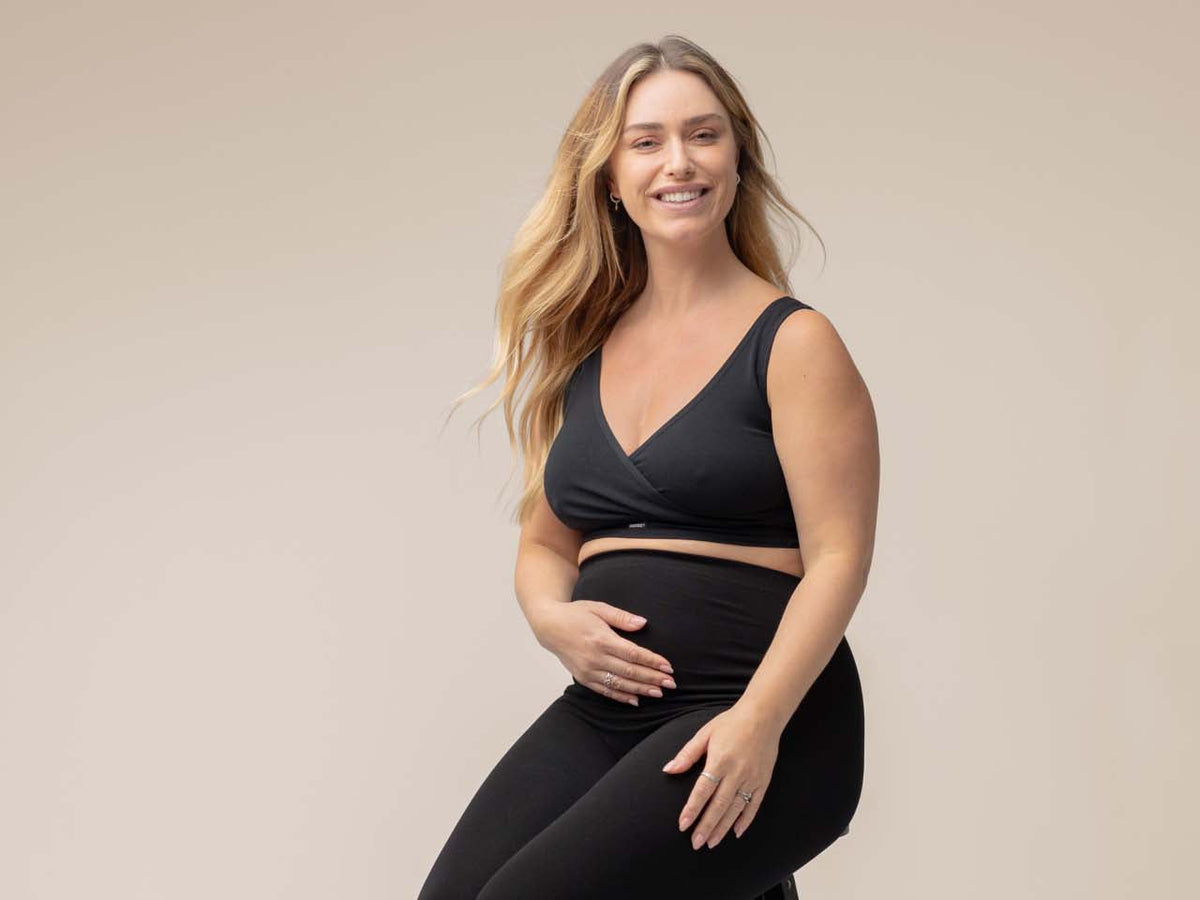
- Over the bump leggings or joggers. Nothing with a waistband that sits where the seat belt goes. Our Comfort+ Maternity Leggings have a panel that goes up over the bump, so nothing cuts in underneath when you've been sitting for hours.
- Compression socks, under the leggings. One reviewer found them "quite tight so wouldn't fit over leggings". Socks first.
- Shoes a bit roomier than you think. Slip ons are good, as your feet can swell on the way and you won't want to be doing laces at 34 weeks.
- Layers on top. Cabins swing between freezing and stuffy, and you can't do much about either from seat 23E.
Put the belt on the way the RCOG describes: reasonably tight across the top of your thighs, then under your bump. Don't let it ride up over the top.

BABYGO® Comfort+ Maternity Leggings
The soft pair for a day in a seat. 86% bamboo, stays opaque as it stretches, with an over the bump panel. £32. Go by your dress size, and don't size up for the bump.
From £32
Which compression socks for flying when pregnant
Knee high, graduated, 20 to 30 mmHg. Graduated means firmest at the ankle and easing off up the calf, and it's the bit that matters, as a plain tight sock can just dig in.
The NHS line is for trips over 4 hours: water, moving about every 30 minutes or so, and graduated compression or support stockings to help reduce leg swelling. That's what they're for. Ours are for comfort and swelling, and we don't claim they stop clots.
Here's the honest limit. The RCOG says that on flights over four hours your midwife or doctor should give you the right size and type, as these stockings are different from standard flight socks. So mention the flight at your next appointment, whatever you've bought. If you've had a clot before, or you have other risk factors, they may want you in a particular stocking or on heparin injections, and what they give you comes first.
Otherwise, the fit decides everything. Go by shoe size, 2 to 5 or 6 to 9, then your calf: if standard socks dig in below your knee, you want Wide Calf. The size guide has the measurements. Measure before you order, because socks can't come back for hygiene reasons.
Put them on at home in the morning, before your ankles have started filling up, and don't leave it for the airport toilets. Turn the sock inside out down to the heel, get your foot in and roll it up. Be warned, it's a workout. One customer on a flight to Spain at 7 months wrote: "it took me and my husband to get them on but surprisingly once on they were really comfy".
Another, on a long haul: "Really comfortable and they didn't slip down. The grip on the base is a bonus too". More on swelling, and on wearing them day to day, in our compression socks guide.

BABYGO® Pregnancy Compression Socks, nude
Graduated 20 to 30 mmHg, soft bamboo blend, grip soles for the aisle and the airport floor. £15 in Standard or Wide Calf.
£15
What to pack in your hand luggage
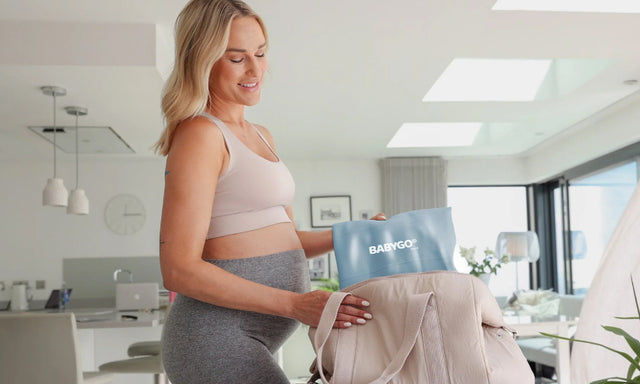
- Your maternity notes, so a doctor abroad can see what's going on
- The fit to fly letter or form, and a photo of it on your phone
- Your insurance details, plus a GHIC for travel in Europe
- An empty water bottle to fill once you're through security
- Snacks you can face, and something for the sickness if you've got it, as the RCOG says motion sickness can make it worse
- Any medicines you need, and a letter from your doctor if that includes injections
- A pillow or rolled jumper for the small of your back
Airport body scanners aren't a worry, by the way. The RCOG says they're not considered a risk to you or your baby, and that occasional flights aren't a radiation risk either.
On the plane
Pay for the aisle seat if you can. You'll be up for the loo anyway, and the RCOG wants you taking regular walks on longer flights. easyJet also restricts some seats when you're pregnant and shows you which when you pick. Ask for cups of water often, go easy on coffee and fizzy drinks, and do your foot exercises in your seat every 30 minutes or so. Set a timer, because you will forget.
When to ask before you book
The RCOG says you may be advised not to fly if you're at increased risk of going into labour early, you've recently had significant vaginal bleeding or you have severe anaemia. The same goes if you've recently had a sickle crisis, or a serious heart or lung condition makes it very hard to breathe. Twins, a previous early birth or any complication so far is a conversation with your midwife before you pay.
Where you're going matters as well. The NHS doesn't recommend travel to places with Zika, says most live vaccines aren't recommended in pregnancy, and warns that some anti malaria tablets aren't safe, so ask your GP before you book anywhere that needs jabs or tablets.
Once you land, one swollen, painful leg, or swelling that comes on suddenly in your face, hands or feet, needs medical advice straight away, wherever you are. Don't wait until you're home. Our socks guide has the full list of what to look out for.
Questions people ask about flying when pregnant
How many weeks pregnant can you fly?
It depends on the airline, and the limit counts for the flight home as well. With one baby, British Airways and Ryanair stop at the end of week 36, easyJet at the end of week 35 and Jet2 at 35 weeks. With twins, it's about week 32 or 33. After 28 weeks, most want a letter from your midwife or doctor.
Can you fly in the first trimester?
Yes. The NHS says flying isn't harmful to you or your baby, though some people put it off in the first 12 weeks because of the sickness and tiredness.
Do I need a fit to fly letter?
From 28 weeks on British Airways, Ryanair and Jet2, yes. easyJet says you don't need a medical certificate. Ask your midwife early, and tell them your flight dates, because the NHS says you may have to pay for the letter and wait several weeks.
Which compression socks are best for flying when pregnant?
Knee high, graduated, 20 to 30 mmHg, firmest at the ankle, in a size that fits your calf as well as your shoe. If standard socks dig in under your knee, go for Wide Calf. Tell your midwife or doctor about the flight too, especially over four hours, as they may want you in a particular stocking.
Do I need compression socks on a short flight?
Not as a rule. The NHS advice is for trips over 4 hours. If your ankles already swell by the end of a normal day, I'd still wear them on a two hour flight, because sitting still doesn't help.
Next: flying over 4 hours or swelling already, take the compression socks, Standard or Wide Calf by your calf measurement. Add the Comfort+ leggings if nothing you own survives a long sit.