

Sleep in pregnancy: positions, night waking and what actually helps
Why sleep falls apart in pregnancy, which positions are advised and when, what to do at 3am, and an honest look at what a pillow can and cannot fix


Somewhere around 30 weeks the nights go. Up for a wee at one, awake at three with a hip that aches and a head running through the hospital bag list, then properly asleep at about six, twenty minutes before the alarm.
If you're nowhere near 30 weeks and already not sleeping, that's normal too. The first trimester does it with hormones and a bladder on a timer. The third does it with the bump, the heartburn and a baby who wakes up the moment you lie down.
This is what the NHS actually says about positions and from when, what's waking people at each stage, and what's worth trying. There's an honest bit on pillows near the end, because we sell one and I'd rather you bought it for the right reasons or not at all.
Quick answer: From 28 weeks, go to sleep on your side, left or right. The NHS says falling asleep on your back after 28 weeks is linked to a higher risk of stillbirth. Before 28 weeks, sleep however you're comfortable. A pillow between your knees and one under the bump keeps you on your side. Caffeine before lunch only, tea early, and at 3am get up rather than lie there.
- The NHS side sleeping advice starts at 28 weeks: go to sleep on your side, either side. If you wake up on your back, turn over.
- Tiredness, even exhaustion, is most common in the first 12 weeks, the NHS says. Later on it's the bump and the loo trips.
- Adults need 7 to 9 hours on average, according to the NHS. Pregnancy doesn't come with its own number.
- Heartburn is more common from 12 weeks. The NHS says not to eat within 3 hours of bed and to prop your head and shoulders up.
- Leg cramps are most common at night. The NHS foot exercise is 30 bends and stretches, then 8 rotations each way, on each foot.
How should you sleep when pregnant?
On your side, from 28 weeks. That's the whole of the NHS advice on position, and it's on the tiredness and sleep problems in pregnancy page.
The safest position to go to sleep in is on your side, either left or right, the NHS says, because research suggests that after 28 weeks falling asleep on your back can double the risk of stillbirth. It thinks that may be to do with the flow of blood and oxygen to the baby.
Two things people miss in that. It's about the position you fall asleep in, not the one you wake up in. And it's either side, not left; more on that in the questions at the end.
Before 28 weeks
Sleep however you're comfortable, front included. The bump decides when front stops working, usually somewhere in the second trimester, and nobody needs to tell you.
If lying flat on your back starts to make you feel faint, the NHS says to turn onto your side. Its exercise in pregnancy page says not to lie flat on your back for long periods after 16 weeks for the same reason: the weight of the bump presses on the main vessel bringing blood back to your heart.
From 28 weeks
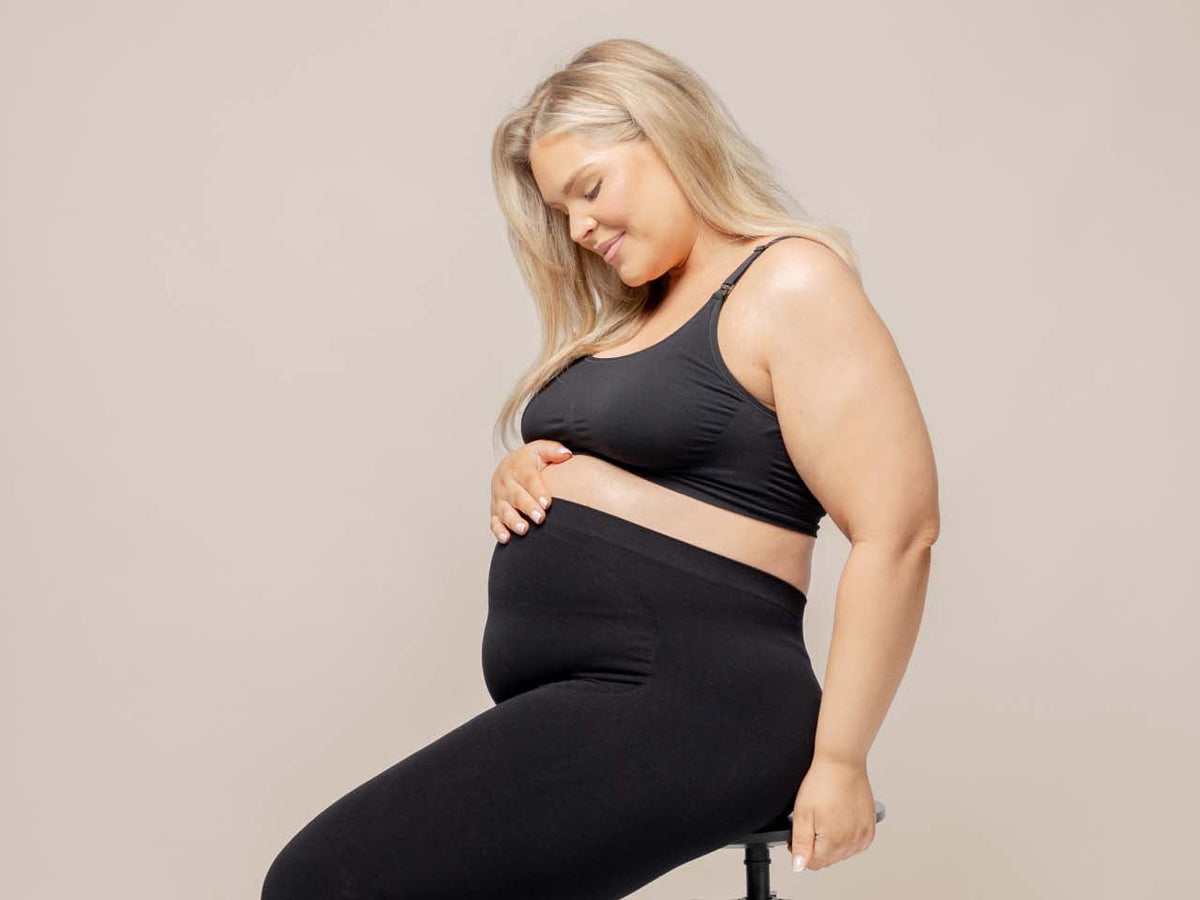
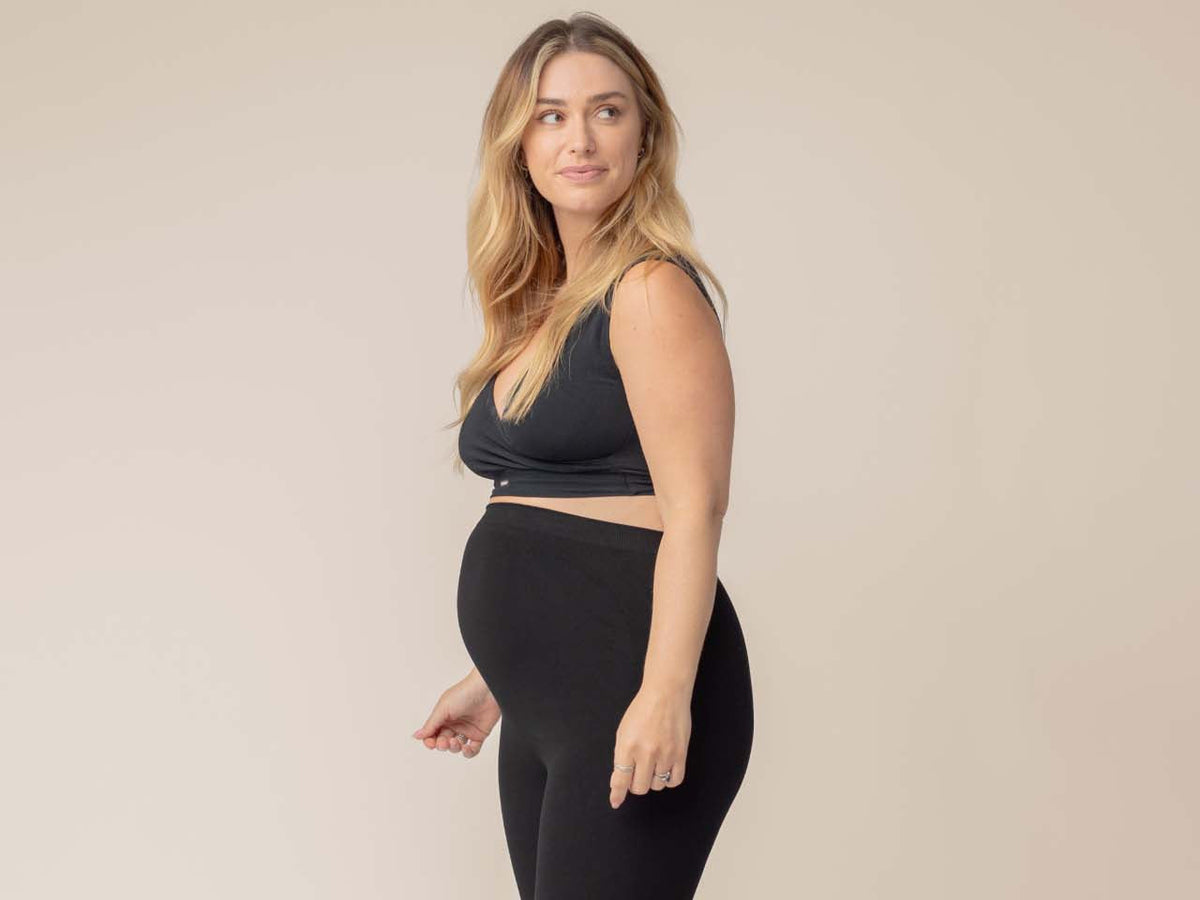
Go to sleep on your side. To stay there, the NHS suggests supporting the bump with pillows and putting one between your knees. Two ordinary pillows do that. A long pregnancy pillow does the same job in one piece that doesn't slide off in the night; whether that's worth paying for is further down.
If you wake up on your back
Turn onto your side and go back to sleep. The NHS wording is "do not worry if you wake up on your back", and the same line is on its stillbirth page. You can't control what you do while you're asleep, and the advice is about how you go to sleep.
Follow your bump. Tell us your due date and we'll send what to expect each week, plus 10% off your first order.
Why is sleep so bad in pregnancy?
Different reasons at different points, and some of them stack up. The rough shape is below, and "usually" is doing real work: plenty of people sail through one stage and hit the wall in the next.
| Weeks | What's going on | What's usually waking you |
|---|---|---|
| 1 to 12 | Hormones. The NHS says tiredness, even exhaustion, is common in the first 12 weeks, and nausea doesn't keep office hours. | Needing a wee, feeling sick, being wiped out at 8pm and wide awake at 3am. |
| 13 to 27 | The bump arrives and front sleeping stops working. Heartburn gets more common from 12 weeks. | Getting comfortable, heartburn, strange dreams, the odd leg cramp. |
| 28 to the birth | Side sleeping from now. The bump is heavy, the hips ache and the bladder has no room left. | Hips, the loo, heartburn, cramps and restless legs, kicks, and the list in your head. |
The NHS puts strange dreams and nightmares about the baby and the birth on its list of normal things. Talking about them with your partner or midwife helps, and dreaming something doesn't mean it's going to happen.
Needing a wee runs the whole way through. The NHS common health problems in pregnancy page says it often starts early and sometimes carries on to the end. Nothing is wrong. It's just annoying.
What actually helps you sleep in pregnancy
The NHS insomnia advice for anyone is the base layer: only go to bed when you're sleepy, get up at the same time every day, relax for an hour before bed, keep the room dark and quiet, exercise in the day, and no tea, coffee or cola in the evening. Then there's the pregnancy layer, which is mostly about whatever is waking you.
| What's waking you | What the NHS suggests | What I'd add |
|---|---|---|
| Needing a wee | Cut caffeine but keep drinking in the day. Later on, rock backwards and forwards on the toilet so the bladder empties properly. | Do most of your drinking before tea time. Dim lamp for the trip, not the big bathroom light. |
| Heartburn | Small meals often, nothing within 3 hours of bed, head and shoulders propped up. Left side can help. Safe medicines exist; ask your midwife or GP. | Big meal at lunch, small one early. Water by the bed, not tea. |
| Leg cramps | Pull your toes hard up towards your ankle, or rub the muscle. To prevent them, bend and stretch each foot 30 times, then rotate it 8 times each way. | Do the foot exercise while the kettle boils, so it actually happens. |
| Restless legs | Usually goes after the birth. Warm bath, walking, stretching or massaging the legs, no caffeine after midday. See a GP if it's stopping you sleeping. | Tell your midwife rather than wait for it to pass. A blood test is quick. |
| Too hot | You'll feel warmer than usual and sweat more in pregnancy. Loose clothing, natural fabrics, a fan, a cool room. | Layers you can kick off one at a time. Breathable fabric on the bed as well as on you. |
| Hips and bump | Your side, with pillows supporting the bump and one between your knees. | The knee pillow is the one that stops the hips aching by morning. Don't drop it to save the bump one. |
| Worry and dreams | Talk to your partner, a friend, your doctor or midwife. Relaxation techniques from antenatal classes. | Notebook by the bed for the list. Once it's written down it stops circling. |
Sources: the NHS pages on indigestion and heartburn in pregnancy and restless legs syndrome, plus the common health problems and tiredness pages linked above.
Exercise is the one that feels backwards when you're shattered, but the NHS is clear: a walk at lunchtime or a swim helps you feel less tired, and antenatal yoga or pilates counts. Just not in the four hours before bed, which is the NHS insomnia page's line for everyone.
Naps change too. The NHS says rest as much as possible in the first 12 weeks, and its insomnia remedies say not to nap in the afternoon or evening. Both are true: an early nap when you're wiped out, nothing after lunch once night sleep is the problem.
What to do at 3am when you can't get back to sleep
The wee has happened, the hip has been turned, and now you're lying there with the list. The NHS insomnia advice is to only be in bed when you're sleepy, so after a while of staring at the ceiling, get up.
Get up, but keep it boring. A dim lamp, not the big light. Something dull to read on paper, a warm caffeine-free drink, a bit of stretching if your legs are restless. Not the phone: the NHS says the blue light from screens makes you more awake, and nothing on there at 3am is good news anyway. Go back to bed when your eyes are heavy.
In the morning, get up at your usual time even if you feel wrecked. The NHS says not to sleep in after a bad night; stick to your regular hours instead. It's the least appealing bit of the advice and the bit that works.
If it's the baby kicking that's woken you, that's them being them, and evenings and nights are often their busy time. If their movements slow down or change from their usual pattern, that's different: the NHS your baby's movements page says to contact your midwife or maternity unit immediately, even in the middle of the night. Don't wait until morning.
Does a pregnancy pillow actually help?
For some of it. Not for all of it, and I'd rather say which.
What the NHS suggests is a pillow supporting the bump and one between your knees. Two ordinary pillows do that on night one. What they don't do is stay put: you turn over, the knee pillow ends up on the floor, the bump one's behind you, and at 3am you're rebuilding the nest. A pregnancy pillow is those two pillows in one shape that turns with you.
So it helps with the hips, which is your top leg dropping forward and twisting your pelvis all night. It helps with staying on your side once the 28-week advice kicks in. And it helps with the partner situation, because one long pillow along your side of the bed takes less room than four loose ones.
One reviewer wrote: "I have used it enough now to give it a fair review. The cover feels soft and the curved shape works well for side sleeping. I noticed a difference from the first few nights."
It doesn't help with the loo, the heartburn or the list. Heartburn wants your head and shoulders propped up, which is a different pillow arrangement altogether. And if you sleep fine once you're comfortable, you don't need one yet.

BABYGO® Moon Pregnancy Pillow
One curve for bump and knees, or turned round, back and knees, along your side of the bed. One size; fold the lower end under if you're shorter. Washable bamboo and cotton cover. A feeding pillow and backrest after the birth.
£39
If it's your pelvis rather than your hips, pain over the pubic bone or across the lower back that's worse when you turn in bed or get out of the car, that's pelvic girdle pain, and it's a midwife conversation before it's a pillow one. The pelvic girdle pain in pregnancy post covers how to sleep with it and when a belt is worth it.
And a support belt is a daytime thing. Lying down, there's nothing for it to lift, so it comes off at bedtime; the pregnancy support belt post explains why.
Which shape of pregnancy pillow to buy, U, C, wedge or a single curve like ours, and how to arrange whichever one you've got, are two posts on their own, out over the next week.
When bad sleep is worth mentioning to your midwife
Most pregnancy insomnia is just pregnancy insomnia. The NHS flags a few things that aren't.
- Sleeplessness alongside feeling hopeless or losing interest in things you used to enjoy. The NHS says that combination can be a sign of depression, and that there is treatment that helps. Tell your midwife or GP.
- Restless legs that are stopping you sleeping. See a GP; it can be linked to low iron.
- Leg cramps that keep disturbing your sleep, last longer than 10 minutes, or come with numbness or swelling. GP again.
- Heartburn that changes to what and when you eat haven't touched. Your midwife or GP can recommend medicine that's safe in pregnancy.
- Feeling faint when you lie on your back. Turn onto your side, and mention it at your next appointment.
Questions we get asked
Is insomnia a sign of early pregnancy?
On its own, no. Broken sleep has a hundred causes. What the NHS does say is that tiredness, even exhaustion, is common in the first 12 weeks, so being shattered all day and awake at night is a familiar early combination. A test is the only thing that answers the question.
What happens if I accidentally sleep on my back while pregnant?
Nothing you need to do except turn over. The NHS says not to worry if you wake up on your back; the advice is about the position you go to sleep in, and you can turn onto your side and go back to sleep.
Can you sleep on your back in the second trimester?
The NHS side sleeping advice starts at 28 weeks, so before that, sleep in whatever position you're comfortable in. If lying flat starts to make you feel faint, which the NHS says can happen as the bump gets heavier, turn onto your side. Plenty of people start practising side sleeping in the second trimester so it's a habit by 28 weeks.
How many hours of sleep do you need when pregnant?
The NHS puts adults at 7 to 9 hours on average, and there's no separate pregnancy number. In practice it's broken hours that get you, not short ones. Rest when you can in the first 12 weeks, and count a sit down with your feet up as rest.
Can I take anything to help me sleep in pregnancy?
Ask before you buy. The NHS says to check with your doctor before taking anything for sleep problems, and the sleeping aids on pharmacy shelves aren't automatically fine in pregnancy. A pharmacist or your midwife will tell you what's safe. The sleep habits above are the first thing they'll suggest anyway.
Which side is best to sleep on in pregnancy, left or right?
Either. The NHS advice is your side, either left or right. Left gets a mention on the NHS heartburn page as a side that can help with reflux, so if heartburn is your problem, try left. Otherwise, whichever side your hips prefer.
If it's the hips and the turning over that are the problem, the pregnancy pillows collection is where the Moon pillow lives, and the due date calculator tells you how far off 28 weeks you are.
Filed under Pregnancy