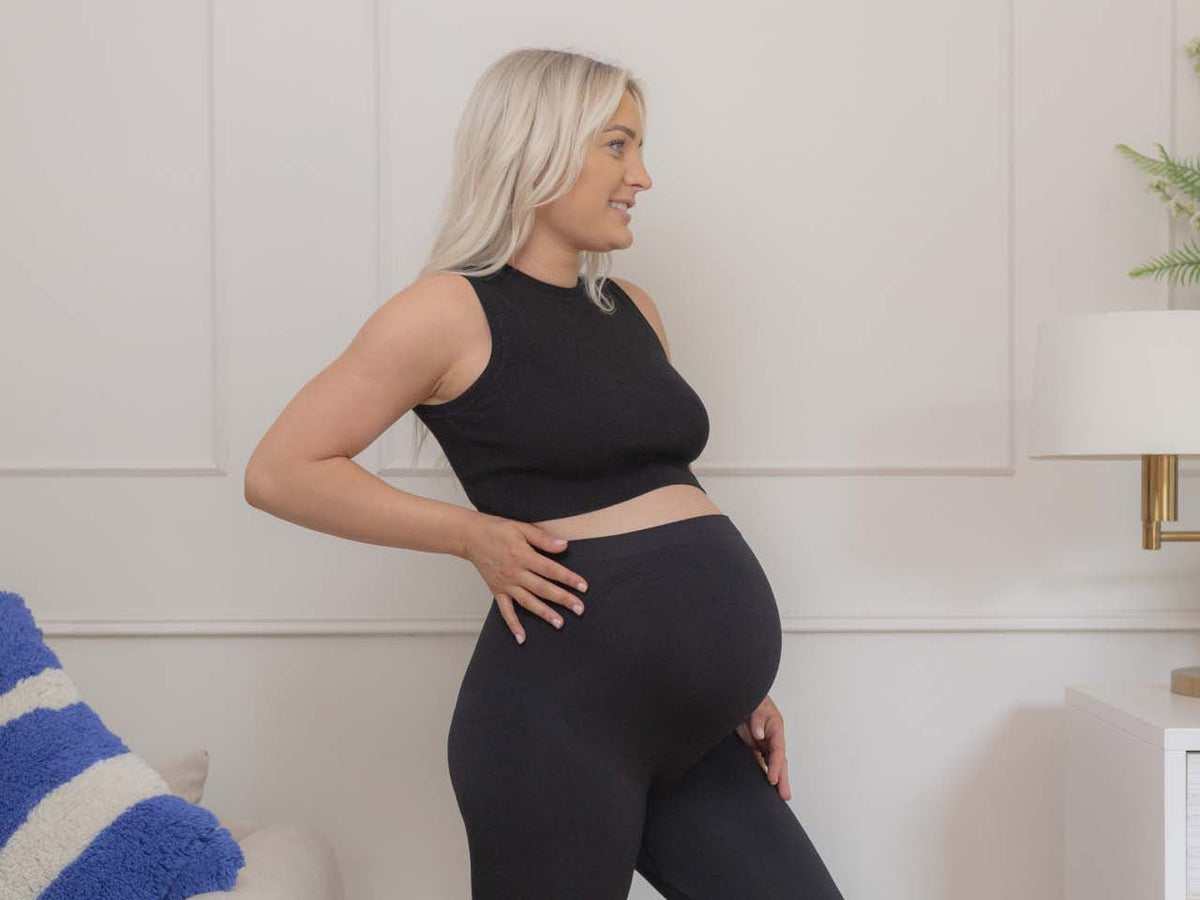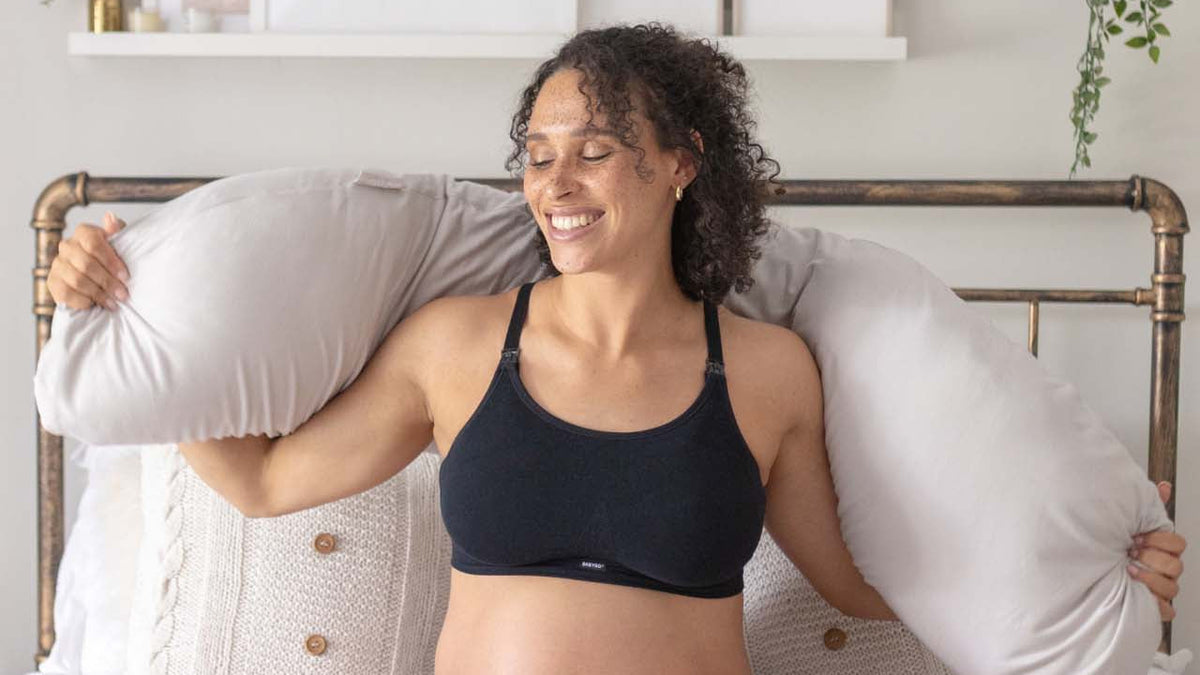
Labour positions: what to try in each stage, and why upright helps
Positions for early labour, established labour and pushing, how a ball or a peanut ball fits in, and what to do if you have an epidural or are on a monitor


At some point in the last few weeks somebody at antenatal class says "stay upright and keep moving", and everyone nods. Then you get home, sit on the sofa, and realise you've no idea what that looks like at 3am with a contraction every eight minutes.
This is the practical version: which positions, at which point, what to do if you end up on the bed with an epidural or a monitor, and where a ball or a peanut ball fits. None of it is a rule. It's a menu.
Quick answer: Upright and leaning forward while it's comfortable, then whatever your body asks for. The NHS says staying upright and gently active in early labour helps your baby move down into your pelvis and helps your cervix open. Sit and sway on a ball, kneel over it, walk, lean on your partner. If you end up in bed, lie on your side with a peanut ball between your knees.
- Early labour can take hours or sometimes days, and you'll probably be told to stay at home for it. The NHS says stay upright and gently active if it starts in the day, and sleep if it starts at night.
- Established labour begins at about 4cm. The NHS says a first labour usually takes 8 to 18 hours from there to fully dilated, often 5 to 12 for a second or third.
- For the birth itself the NHS lists sitting, lying on your side, standing, kneeling or squatting, and all fours if your back has been aching.
- Your midwife listens to your baby's heart every 15 minutes with a handheld device and you're free to move around. Electronic monitoring straps two pads to your bump and can restrict you.
Why upright and forward leaning helps
Gravity, mostly. When you're upright, your baby's weight is pressing down onto the cervix, which is the direction you want. When you lean forward, you take the weight off your lower back and give your baby room at the front of the pelvis.
That's why the NHS stages of labour page says that if labour starts during the day you should stay upright and gently active, because it helps your baby move down into your pelvis and helps your cervix dilate. Its pain relief in labour page puts movement on the self-help list too: your position can make a difference, so try kneeling, walking around, or rocking backwards and forwards.
What upright doesn't do is guarantee anything. Some people do everything on this page and have a long labour; some lie down the whole time and have a quick one. Positions are about comfort and giving your body the best chance, not control.
The NHS also says it's a good idea to try some of these positions before you go into labour. Kneeling over a ball for the first time mid-contraction is not the moment to find out your knees hate it.
Positions for early labour at home
The latent stage is the long, boring, slightly frightening part where the contractions are irregular and the cervix is softening and opening. The NHS says it can take hours or sometimes days, and if you go in too early they may suggest you go home again.
So this is the bit you do in your own living room, and the ball is the best seat in the house for it.
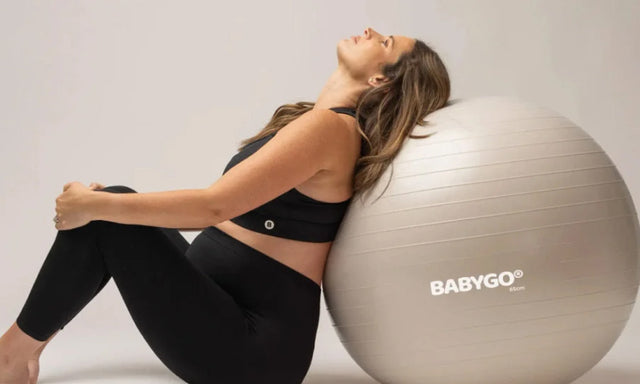
- Sit on the ball and sway. Feet flat and wide, hips a little higher than your knees, circles or side to side through a contraction. Between them, just sit.
- Kneel and lean over it. Knees on a cushion, chest draped over the ball, rock if you want to. This is the one people go back to when the back ache starts.
- Stand and lean. Hands on the worktop or the back of the sofa, feet apart, sway. Your partner rubbing your lower back is on the NHS list for easing pain.
- Walk. Round the house or to the end of the road. The NHS says walk or move about if you feel like it.
- Bath or shower. Warm water is on the NHS list for the early stage.
Eat and drink; you'll need the energy later. If it starts at night, the NHS says stay comfortable and sleep if you can. Lying on your side with a pillow between your knees counts. Resting isn't cheating.
The sways and the kneeling lean are in our pregnancy ball exercises post, which is the place to learn them a few weeks early. Sizing and inflating the ball is covered in the birthing ball guide.

BABYGO® Birthing Ball
The seat for the hours at home: sit and sway, kneel and lean. Anti-burst, 2mm wall, tested to hold 1000kg, and the BABYGO® Pregnancy Book in the box with the ball exercises and the labour positions. 65cm or 75cm by your height.
From £29 · Sold out
Positions for established labour
Established labour is when your cervix has dilated to about 4cm and the contractions are stronger and more regular. Once you're in, the NHS says you can either walk around or get into a position that feels comfortable to labour in. That's the whole instruction, and it's deliberately loose.
Here's how the common positions compare.
| Position | How | Good for | Worth knowing |
|---|---|---|---|
| Sitting on the ball | Feet flat and wide, hips above knees, sway or circle through contractions | Staying upright when standing is too much; resting your legs | Have someone or a wall behind you when you're tired |
| Kneeling, leaning forward | Knees on a pillow, chest over the ball, the bed or a chair seat | Back ache; taking the weight off your lower back | The position the NHS names for backache in labour |
| Standing, leaning on someone | Arms round your partner's neck or hands on a wall, hips swaying | Contractions that need you moving; letting gravity work | Tiring over hours, so swap with sitting |
| Walking | Corridor, room, wherever you're allowed | Early established labour, restlessness | Stop and lean through each contraction |
| All fours | Hands and knees on the bed or a mat, rock your hips | Backache; a baby that's back to back | Pad your knees; it's a long time to kneel |
| Side lying | On your side, top leg supported on a peanut ball or pillows | Resting; epidural; when upright has run out | Change sides now and then so you're not stuck on one |
You won't stay upright for twelve hours, and nobody expects you to. Most people cycle: standing and swaying, a stretch on the ball, a lie down on your side, back up again.
If your baby is back to back, all fours and the forward lean are the ones midwives tend to suggest, because they let the heaviest part of the baby swing towards the front. Whether that turns anyone is another matter; there's more in getting your baby into a good position for birth.
Birthing positions for pushing
The second stage runs from fully dilated to the birth. The NHS says your midwife will help you find a comfortable position to give birth in, and lists sitting, lying on your side, standing, kneeling or squatting, with the honest note that squatting may be difficult if you're not used to it.
If you've had lots of backache in labour, the NHS says kneeling on all fours may help. In practice a lot of people push kneeling on the bed, leaning over the raised head end, because it's upright without needing legs that still work.
You'll push during contractions when you feel the urge, which the NHS says can feel like needing a poo. With an epidural you may not feel it at all, and the midwife tells you when. The NHS says this stage should last no longer than 3 hours for a first baby and 2 hours after that, which is why your midwife watches the clock.
Near the end you'll be asked to stop pushing and take short breaths so the head is born slowly. That's easier in a position you can hold still in.
Labour positions with an epidural
An epidural changes the menu. The NHS says it may make your legs feel heavy, and unless your hospital offers a mobile epidural (many don't, because it needs remote monitoring equipment) you'll be on the bed. Your contractions and the baby's heart rate are monitored continuously, which means a belt round your bump.
So the upright positions are mostly out, and what's left is how you lie. On your side, with your top leg lifted and supported, keeps the pelvis open while you rest. Flat on your back is the one to avoid where you can.
That's the peanut ball's job. It sits between your knees or under your top leg while you lie on your side, and holds the leg there so you're not asking a numb leg to do it. Your midwife or partner moves it and turns you, and you swap sides regularly; your midwife will say how often. The four positions, with pictures, are in the peanut ball for labour post.

BABYGO® Peanut Ball for Labour
For the lying down part of labour, with or without an epidural. One size (50cm), a foot pump, spare plugs and the BABYGO® Labour Book in the box, with positions to practise at home first and a hospital bag checklist. Inflate it before you pack the bag, not on the day.
£29
Ask at an antenatal appointment whether you can bring your own; units vary.
Positions if you're being monitored
Most of the time, monitoring doesn't stop you moving. The NHS says your midwife will listen to your baby's heart every 15 minutes with a small handheld device, and you'll be free to move around as much as you want between listens.
Electronic monitoring is different: two pads strapped to your bump, one for contractions and one for the heartbeat, wired to a machine. The NHS says it's suggested if there are concerns about you or your baby, or if you have an epidural, and that it can sometimes restrict how much you can move around.
Restrict, not stop. With the pads on you can usually still sit on the ball beside the bed, stand and lean on it, kneel on the mattress over the raised head end, or lie on your side with the peanut ball. Ask the midwife what you can do rather than assuming it's the bed.
If the pads went on because of a worry about the heartbeat, the NHS says the monitor can come off once the heartbeat is shown to be normal. Ask.
Positions in a birth pool
Water is on the NHS pain relief list: being in water can help you relax and make the contractions seem less painful. Ask if you can have a bath or use a birth pool. The water is kept at a comfortable temperature, not above 37.5C, and your temperature is checked.
The positions are the same ones, made easier. Kneel and lean over the side with your arms on the rim. Sit back against the wall between contractions. Squat holding the edge, which most people can't manage on dry land and can in water. All fours works too.
Two practical things. A bikini or tankini top, or an oversized t-shirt, is what most people wear in, and pack something warm for when you get out for the toilet or an examination. And pools aren't always free when you arrive, so have a dry land plan you're just as happy with.
How to tell you're in labour, and when to ring
Because none of the above matters if you're not sure it's started. The NHS signs that labour has begun page lists contractions or tightenings, a show (the pink, jelly-like plug of mucus coming away), backache, an urge to go to the toilet, and your waters breaking.
Practice contractions, the Braxton Hicks kind, feel uncomfortable but are usually painless, don't happen very often and don't build. Real ones get longer, stronger and closer together, and your bump goes hard under your hand.
Call your midwife or maternity unit for guidance if you think you're in labour, or if regular contractions are coming every 5 minutes or more often.
Call them urgently if your waters break, you're bleeding, your baby is moving less than usual, you're under 37 weeks, any contraction lasts longer than 2 minutes, or you're having 6 or more in 10 minutes. The NHS says not to wait until the next day, even in the middle of the night. Call 999 if you think the baby is coming now and you have a strong urge to push.
And if you're reading this at 38 weeks, not in labour, wondering whether the ball can hurry things along: it can't, and nothing else at home reliably does either. What it does in the last weeks is keep you upright and comfortable.
Questions we get asked
What is the best position to give birth in?
The one you're comfortable in when you get there. The NHS lists sitting, lying on your side, standing, kneeling and squatting, and says your midwife will help you find one. Kneeling and leaning forward is the one most people end up in, but nobody can tell you in advance.
Which labour positions help with back pain?
Kneeling on all fours, which the NHS names for backache in labour, and leaning forward over a ball, the bed or your partner. Both take the baby's weight off your lower back. Add a hand rubbing the base of your spine and a warm bath in the early stage.
Can I move around with an epidural?
Usually not much. The NHS says an epidural may make your legs feel heavy and that most hospitals can't offer the mobile kind, so you'll be in bed with continuous monitoring. What you can change is how you lie: on your side, top leg supported on a peanut ball, swapping sides regularly with help.
Can I still change position if I'm being monitored?
Yes. Handheld monitoring every 15 minutes leaves you free to move. Electronic monitoring with pads on your bump can restrict you but usually still allows the ball beside the bed, standing and leaning, kneeling on the mattress and side lying. Ask your midwife rather than assuming.
Do I need to practise labour positions before the birth?
The NHS says it's a good idea to try some of them before you go into labour, and I'd agree. Ten minutes on the ball in the evenings from about 34 weeks, sitting, swaying and kneeling over it, means none of it is new on the day.
What positions can I use in a birth pool?
Kneeling and leaning over the side, sitting back against the wall, squatting while holding the rim, and all fours. The water supports your weight, so positions that are hard on land get easier.
The birthing ball collection has the ball, the pump and the peanut ball together, and the size guide takes a minute before you order.